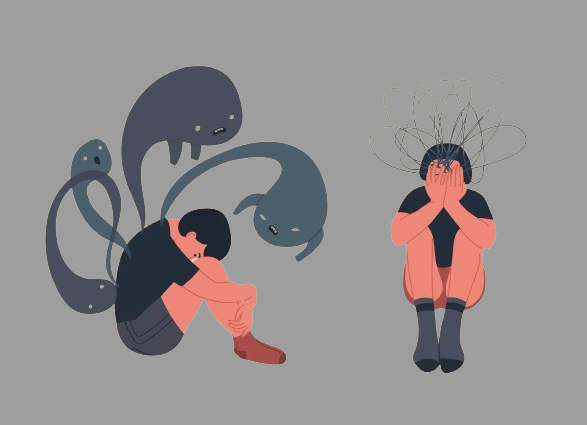
Living with bipolar disorder or supporting someone who experiences manic episodes can feel confusing, overwhelming, or even frightening—especially when symptoms escalate quickly. One of the most intense and disruptive experiences during mania is racing thoughts: a mental storm where thoughts move so rapidly that it becomes nearly impossible to focus, rest, or even speak at a normal pace.

Racing thoughts are more than “thinking fast.” They are intrusive, non-stop, chaotic mental streams that can overpower a person’s ability to concentrate, sleep, or function. They reflect a deeper shift happening in the brain during mania—one that influences mood, behavior, energy, and decision-making.
This article explores what racing thoughts really are, how they connect to mania, how to know when mania is ending, how to calm an episode, and how to identify if someone is manic. Whether you’re seeking clarity for yourself or supporting a loved one, this guide offers a clear, compassionate, and evidence-based explanation.
What is racing thoughts mania?
Racing thoughts are one of the core symptoms of mania, a heightened emotional state commonly associated with bipolar I disorder, bipolar II disorder, and sometimes cyclothymia or certain medical or neurological conditions. When someone experiences racing thoughts, their mind moves at a speed far beyond what feels natural or controllable.
How racing thoughts feel from the inside
People who go through racing thoughts often describe the experience as:
- “My mind is running like a motor I can’t turn off.”
- “Thoughts jump from one idea to the next without stopping.”
- “It feels like 10 different conversations are happening in my head.”
- “I can’t slow down long enough to make one decision.”
This mental speed-up is deeply connected to changes in brain chemistry and neural activation during a manic episode. Dopamine surges, decreased sleep, and changes in the brain’s thought-processing centers contribute to this overwhelming cognitive rush.
How racing thoughts affect behavior
Because the mind is moving so rapidly, behavior often follows:
- Speech becomes accelerated or pressured.
- New ideas appear constantly but are difficult to complete.
- Focus becomes nearly impossible.
- Tasks are started impulsively and abandoned quickly.
- Sleep is disrupted or feels unnecessary.
- Decisions become risky or poorly planned.
People experiencing mania often feel highly confident or euphoric, which can intensify the rapid thought patterns. In some cases, racing thoughts lead to irritability or frustration if the mind becomes too overloaded.
Racing thoughts vs. normal fast thinking
It’s important to understand that racing thoughts during mania are not simply “thinking fast.”
Normal fast thinking might happen after caffeine or during excitement. But racing thoughts are:
- involuntary
- constant
- overwhelming
- intrusive
- linked to mood elevation
- tied to little or no sleep
- often accompanied by impulsivity or unrealistic ideas
They can feel almost alien or uncontrollable, as if the brain is running without permission.
Why racing thoughts happen during mania
Scientists don’t know the exact cause, but several psychological and biological factors contribute:
- Hyperactive dopamine system
- Reduced need for sleep, which intensifies cognitive speed
- Increased goal-directed activity
- Disinhibition, meaning fewer filters on thoughts
- Brain overstimulation, especially in mood and cognitive networks
Essentially, the brain becomes overstimulated and loses the ability to regulate the intensity and speed of thoughts.
Common signs that racing thoughts are part of mania
Racing thoughts usually occur alongside other signs of mania:
- Excessive talking or speech that’s difficult to interrupt
- Grandiosity or unusually inflated confidence
- Increased energy or restlessness
- Risky behaviors or impulsive decisions
- Reduced need for sleep
- Difficulty focusing
- Increased irritability or agitation
- Rapid shifts in attention
If several of these signs appear with racing thoughts, it strongly suggests manic or hypomanic activity.
How do you know when a manic episode is over?
Mania does not suddenly “stop.” It fades gradually and often unpredictably. Understanding the end of a manic episode can help manage symptoms, reduce risks, and support emotional stability.
Below are the major signs that mania is winding down.
1. Thoughts begin to slow down
The most noticeable sign is that racing thoughts start losing speed.
- Ideas feel calmer and less overwhelming.
- The mind starts to process information more slowly.
- It becomes possible to concentrate for short periods.
- Speech becomes more relaxed and less rushed.
This shift may feel like mental exhaustion—almost like the brain is catching its breath.
2. Energy levels decrease
As mania ends, the body begins returning to its natural rhythm:
- The constant urge to move slows down.
- Physical restlessness reduces.
- The person may feel worn out or depleted.
Some individuals crash into a depressive phase, while others simply return to their baseline mood.
3. Sleep begins to normalize
One of the clearest signs that a manic episode is ending is the sudden return of sleep:
- The person starts sleeping longer.
- They actually feel tired again.
- Insomnia or sleepless energy fades.
This happens because the brain is no longer in a hyperactivated state.
4. Impulsivity decreases
During mania, people often take risks—overspending, gambling, quitting jobs, starting impulsive projects, or engaging in unsafe activities. As mania ends:
- Impulsive urges weaken.
- Decision-making becomes clearer.
- The person may feel regret or confusion about previous actions.
This emotional shift is common and often distressing, especially when consequences become clear.
5. Irritability or agitation fades
Not all mania is euphoric. Many people experience irritable mania, where mood swings are fast, intense, and overwhelming.
When mania is ending:
- Irritability reduces.
- Emotional reactions slow down.
- The person feels more steady and less explosive.
This emotional settling is a key indicator of stabilization.
6. Improved self-awareness
As the episode fades, many individuals regain insight into their behavior:
- They realize their thoughts were unusually fast.
- They notice how intense their mood was.
- They begin to reflect on decisions made during the episode.
This insight often doesn’t exist during the peak of mania.
7. Stabilization of daily routines
Routine activities begin to feel manageable again:
- Eating habits normalize.
- Sleep patterns become steady.
- Work or school becomes easier to focus on.
- Conversations feel more natural.
A return to routine is a major sign that the mind is settling.
Important note
Even though mania may be ending, after-effects can last days or weeks, such as:
- mental fatigue
- emotional exhaustion
- regret or confusion
- social withdrawal
- mild depressive symptoms
Full stabilization often requires rest, support, and professional monitoring.
How to calm a manic episode
Managing mania requires a combination of grounding techniques, environmental changes, self-regulation, and—in many cases—professional intervention. While some people can partially self-soothe, others may require urgent psychiatric support.
Below are evidence-supported methods to calm or reduce manic intensity.
1. Create a low-stimulation environment
Mania feeds on stimulation. To calm the mind:
- Dim the lights.
- Turn off music, TV, or loud noises.
- Reduce conversations or social interactions.
- Avoid social media and online stressors.
- Step into a quiet room or safe space.
A calmer sensory environment signals the brain to slow down.
2. Use grounding techniques
Grounding helps bring attention back to the body, slowing the thought stream.
Techniques include:
- Deep, slow breathing
- Stretching or gentle movement
- Holding a cold object
- Naming objects in the room
- Touch-based grounding like weighted blankets
Grounding does not stop mania completely, but it reduces intensity.
3. Regulate sleep as quickly as possible
Sleep is one of the strongest stabilizers for manic symptoms.
Try:
- Lying down in a dark room
- Using calming sounds or white noise
- Following a bedtime ritual
- Avoiding caffeine, sugar, or screens
- Practicing slow breathing to induce relaxation
Even a short rest can reduce manic escalation.
4. Reduce triggers
Common mania triggers include:
- Emotional stress
- Sleep deprivation
- Substance use
- Excessive stimulation
- Conflicts or arguments
Reducing triggers helps slow the mind.
5. Avoid alcohol, caffeine, and drugs
These substances can dramatically worsen manic symptoms. They also disrupt sleep and intensify racing thoughts.
6. Practice mindful slowing
Techniques that encourage mental slowing include:
- Writing one thought at a time in a journal
- Speaking slowly on purpose
- Listening to calm, repetitive sounds
- Doing one simple task at a time
This helps reduce internal chaos.
7. Seek help from a mental-health professional
Mania often requires professional support:
- Medication adjustments
- Crisis intervention
- Psychotherapy
- Support from a psychiatrist
A mental-health professional can help stabilize mood and prevent escalation.
8. Emergency signs requiring immediate help
A manic episode may require urgent support if the person:
- hasn’t slept for days
- becomes impulsive or risky
- shows agitation or aggression
- appears psychotic (hallucinations, delusions)
- threatens harm to themselves or others
In these situations, emergency intervention is essential.
How to tell if someone is manic
Recognizing mania early helps prevent dangerous behaviors or severe episodes. Signs can vary from subtle to extreme, depending on the individual and the intensity of the episode.
Below are the most common indicators.
1. Rapid or pressured speech
The person may:
- talk unusually fast
- jump between ideas
- interrupt frequently
- speak loudly or passionately
- have difficulty stopping themselves
Speech mirrors the speed of their thoughts.
2. Extremely high energy
Common behaviors include:
- Restlessness
- Pacing or moving constantly
- Starting multiple tasks at once
- Feeling “wired” despite lack of sleep
Energy levels appear unnatural or unsustainable.
3. Racing thoughts
Racing thoughts are the internal version of pressured speech:
- Ideas move rapidly
- Hard to concentrate
- Difficulty filtering thoughts
- Constant mental activity
This is one of the most reliable signs of mania.
4. Decreased need for sleep
People in mania often say:
“I don’t feel tired.”
“I only slept 2 hours but feel amazing.”
This is not just insomnia—it’s a reduced need for sleep.
5. Elevated or irritable mood
Mania can look like:
- extreme excitement
- euphoria
- overconfidence
- irritability or agitation
- sudden mood swings
Mood shifts are rapid and intense.
6. Impulsive or risky behavior
Mania reduces self-control and leads to impulsive decisions:
- Overspending
- Gambling
- Unsafe sex
- Reckless driving
- Starting unrealistic projects
- Sudden travel plans
These behaviors often appear out of character.
7. Changes in thinking or beliefs
Some individuals develop:
- grandiose ideas (“I’m going to become a billionaire by next week”)
- unrealistic abilities
- newly perceived talents
- overly optimistic plans
- in severe cases, delusions
These thoughts feel convincing to the person experiencing them.
8. Increased goal-directed activity
People may feel suddenly inspired to:
- clean the entire house
- write a book overnight
- create big projects
- reorganize everything
- start new business ideas
This productivity is often unfocused and unsustainable.
9. Distractibility
The person may:
- switch tasks rapidly
- lose focus quickly
- become easily excited
- struggle to follow conversations
Attention moves as fast as their thoughts.
10. Social, financial, or interpersonal problems
As mania escalates, consequences appear:
- conflicts with family
- difficulties at work
- financial strain
- impulsive decisions affecting relationships
These issues are often noticed by others before the person themselves.
Final Thoughts
Racing thoughts in mania are intense, overwhelming, and deeply intertwined with bipolar disorder and related conditions. They are not simply “thinking fast”—they represent a rapid and uncontrollable mental acceleration that can disrupt daily life, relationships, sleep, and decision-making.
Understanding the signs of mania, recognizing when an episode is ending, and learning techniques to calm the mind can all support better mental health outcomes. Whether you’re managing mania personally or supporting a loved one, knowledge is one of the most powerful tools for navigating this condition with clarity and compassion.