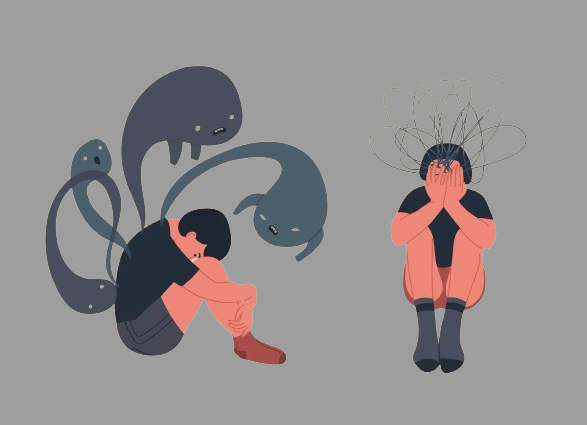
Chronic stress symptoms can slowly affect your body, mind, and daily life without you even realizing it. Many people experience stress from work, finances, relationships, or health concerns, but when stress continues for weeks or months, it can become chronic and start damaging your physical and mental well-being.
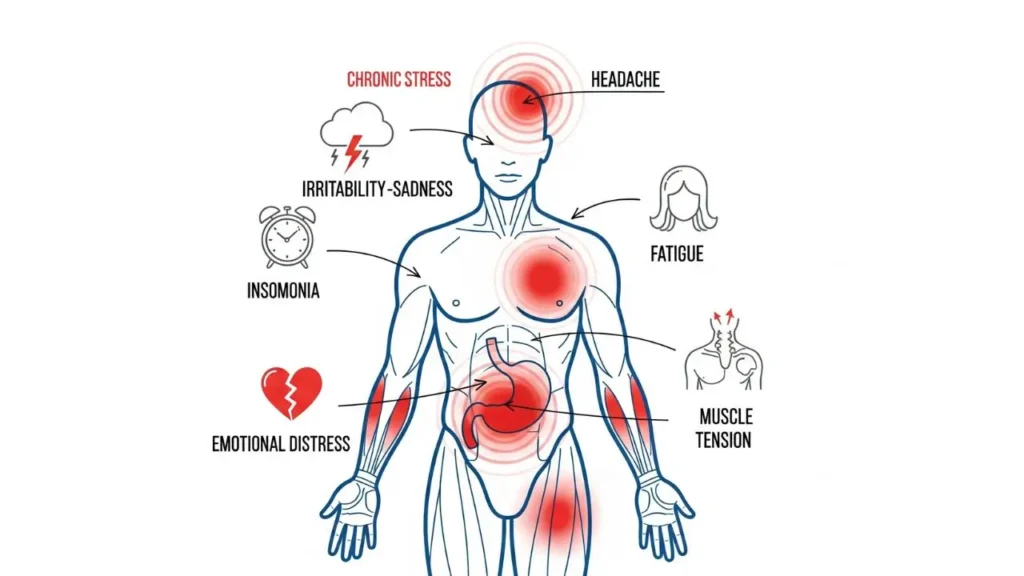
Unlike short bursts of stress that help you react quickly in difficult situations, chronic stress keeps your body in a constant state of tension. Over time, this can lead to fatigue, anxiety, sleep problems, digestive issues, and even serious health conditions such as heart disease or depression.
Understanding the warning signs of long-term stress is essential because many people ignore the symptoms until they become severe. By recognizing chronic stress symptoms early, you can take steps to manage stress, protect your health, and regain balance in your life.
What Is Chronic Stress?
Chronic stress is a prolonged state of emotional or physical tension that occurs when stressful situations continue for an extended period. Unlike acute stress, which happens temporarily during challenging moments, chronic stress persists for weeks, months, or even years.
When your body experiences stress, it activates the fight-or-flight response, releasing hormones such as cortisol and adrenaline. These hormones prepare your body to respond quickly to danger.
However, when stress becomes constant, your body remains in this heightened state, which can lead to serious health consequences.
Acute Stress vs Chronic Stress
| Type of Stress | Characteristics |
|---|---|
| Acute Stress | Short-term stress triggered by immediate challenges |
| Episodic Stress | Frequent episodes of stress |
| Chronic Stress | Long-lasting stress that continues over time |
Common Causes of Chronic Stress
Several life situations can trigger long-term stress, including:
- Work pressure or job insecurity
- Financial problems
- Relationship conflicts
- Family responsibilities
- Chronic illness
- Academic stress
- Major life changes
When these stressors continue without relief, the body begins to show chronic stress symptoms that affect both physical and emotional health.
How Do I Know If I Have Chronic Stress?
Many people live with chronic stress without recognizing it. The symptoms often appear gradually and may feel like normal fatigue or everyday anxiety.
However, if stress starts interfering with your daily functioning, it may be a sign of long-term stress.
Warning Signs You May Have Chronic Stress
Common signs include:
- Feeling constantly overwhelmed
- Persistent fatigue even after rest
- Irritability or mood swings
- Difficulty concentrating
- Trouble sleeping or insomnia
- Frequent headaches or muscle tension
- Digestive problems
People with chronic stress often describe feeling as though their mind never stops worrying. This ongoing tension can affect relationships, productivity, and overall quality of life.
If these symptoms last for several weeks or months, they may indicate chronic stress symptoms rather than temporary stress.
What Are 7 Symptoms of Long-Term Stress?
Long-term stress can affect nearly every system in the body. Here are seven of the most common symptoms.
1. Constant Fatigue
Chronic stress drains your mental and physical energy. Even after sleeping, you may feel exhausted and unmotivated.
This happens because stress hormones keep your body in a state of alertness, preventing proper rest and recovery.
2. Sleep Problems
Many people with chronic stress struggle with insomnia or poor sleep quality.
Common sleep issues include:
- Difficulty falling asleep
- Waking up during the night
- Restless sleep
- Early morning awakening
Sleep problems often worsen stress, creating a cycle that is difficult to break.
3. Frequent Headaches
Tension headaches are a common symptom of prolonged stress. Muscle tension in the neck and shoulders can lead to persistent headaches.
Some people also experience migraines triggered by stress.
4. Digestive Problems
Stress can disrupt the digestive system and cause symptoms such as:
- stomach pain
- nausea
- diarrhea
- constipation
- bloating
This occurs because the gut and brain are closely connected through the nervous system.
5. Anxiety and Mood Swings
Chronic stress often leads to emotional instability. You may feel anxious, irritable, or easily frustrated.
Mood swings can affect relationships and make everyday interactions more challenging.
6. Difficulty Concentrating
Long-term stress can affect memory and focus. People may find it difficult to:
- concentrate on tasks
- remember information
- make decisions
Stress hormones can interfere with brain function, particularly in areas responsible for attention and learning.
7. Weakened Immune System
People experiencing chronic stress often get sick more frequently. Stress can weaken the immune system, making it harder for the body to fight infections.
This is one of the most serious chronic stress symptoms because it affects overall health.
What Are 5 Chronic Stress Symptoms?
While many symptoms can appear, five signs are especially common among people experiencing long-term stress.
1. Persistent Fatigue
Constant tiredness is often the first sign of chronic stress. Even small tasks may feel overwhelming.
2. Sleep Disturbances
Poor sleep patterns are strongly linked to stress and can significantly affect mental health.
3. Irritability
Stress can make people feel easily annoyed or emotionally reactive.
4. Muscle Tension
Stress causes muscles to tighten, leading to neck pain, shoulder stiffness, and back pain.
5. Frequent Illness
A weakened immune system can lead to more colds, infections, and slower recovery from illness.
Recognizing these chronic stress symptoms early can help prevent long-term health problems.
Physical Chronic Stress Symptoms
Chronic stress affects the body in many ways. Over time, stress hormones can disrupt normal bodily functions.
Common Physical Symptoms
Some of the most common physical symptoms include:
- headaches
- muscle pain
- fatigue
- digestive issues
- rapid heartbeat
- high blood pressure
How Stress Affects the Body
Stress activates the nervous system, which prepares the body to deal with threats. When this response remains active for long periods, it can strain the body’s organs and systems.
For example:
- the heart works harder
- muscles remain tense
- digestion slows down
- hormones become imbalanced
These changes explain why chronic stress symptoms can affect multiple parts of the body.
Emotional and Psychological Symptoms
Chronic stress not only affects the body but also has a major impact on emotional health.
Common Emotional Symptoms
People experiencing long-term stress may feel:
- anxious
- overwhelmed
- irritable
- emotionally exhausted
- hopeless
Some individuals may also develop symptoms of depression.
Effects on the Brain
Stress hormones can influence brain function by affecting areas responsible for memory, emotions, and decision-making.
This is why people experiencing chronic stress often struggle with focus, motivation, and emotional regulation.
Long-Term Effects of Chronic Stress on Health
If chronic stress continues without management, it can lead to serious health problems.
Potential Health Risks
Long-term stress has been linked to:
- heart disease
- high blood pressure
- diabetes
- digestive disorders
- depression and anxiety disorders
- weakened immune system
These risks highlight why recognizing chronic stress symptoms early is so important.
How to Control Chronic Stress
Managing stress requires a combination of healthy habits and practical coping strategies.
Here are several effective ways to reduce stress.
1. Exercise Regularly
Physical activity helps reduce stress hormones and improves mood by releasing endorphins.
Even simple activities like walking can make a difference.
2. Practice Deep Breathing
Breathing exercises help calm the nervous system and reduce tension.
Try breathing slowly and deeply for a few minutes when you feel overwhelmed.
3. Improve Sleep Habits
Good sleep is essential for managing stress.
Tips for better sleep include:
- maintaining a consistent sleep schedule
- avoiding screens before bed
- creating a relaxing bedtime routine
4. Practice Mindfulness or Meditation
Mindfulness techniques help you focus on the present moment and reduce anxiety about the future.
Meditation can significantly reduce chronic stress symptoms when practiced regularly.
5. Manage Time Effectively
Organizing tasks and setting realistic goals can reduce feelings of overwhelm.
Prioritize important responsibilities and avoid overcommitting.
6. Seek Social Support
Talking to friends, family members, or support groups can provide emotional relief and perspective.
7. Consider Professional Help
Therapists and counselors can teach effective stress-management strategies and help address underlying issues.
When to Seek Professional Help
Sometimes stress becomes too overwhelming to manage alone.
You should consider seeking professional help if you experience:
- panic attacks
- severe anxiety
- inability to function at work or home
- persistent depression
- thoughts of self-harm
Mental health professionals can provide therapy, coping strategies, and support.
Lifestyle Changes That Reduce Chronic Stress
Making small lifestyle adjustments can significantly improve your ability to manage stress.
Helpful Lifestyle Habits
- Maintain a balanced diet
- Limit caffeine and alcohol
- Spend time outdoors
- Stay physically active
- Maintain social connections
- Practice relaxation techniques
Consistency is key. Even small daily habits can gradually reduce chronic stress symptoms and improve overall well-being.
Conclusion
Chronic stress symptoms can affect nearly every part of your life, from physical health to emotional well-being and daily productivity. While occasional stress is a normal part of life, long-term stress can lead to serious health problems if left unmanaged.
Learning to recognize the warning signs—such as fatigue, sleep disturbances, irritability, and frequent illness—can help you take action before stress becomes overwhelming.
The good news is that chronic stress is manageable. By adopting healthy lifestyle habits, practicing relaxation techniques, improving sleep, and seeking support when necessary, you can reduce stress and restore balance in your life.
If you believe you may be experiencing chronic stress symptoms, paying attention to your body and prioritizing self-care can be the first step toward better mental and physical health.
FAQ
How do I know if I have chronic stress?
You may have chronic stress if you feel constantly overwhelmed, fatigued, or anxious for weeks or months. Common signs include sleep problems, headaches, irritability, digestive issues, and difficulty concentrating. If these symptoms persist and interfere with daily life, they may indicate chronic stress rather than temporary stress.
What are 7 symptoms of long-term stress?
Seven common symptoms of long-term stress include constant fatigue, sleep disturbances, frequent headaches, digestive problems, anxiety, difficulty concentrating, and a weakened immune system. These symptoms occur because prolonged stress keeps the body in a continuous state of tension.
What are 5 chronic stress symptoms?
Five common chronic stress symptoms include persistent fatigue, insomnia, irritability, muscle tension, and frequent illness. These symptoms can gradually worsen if stress continues without proper management.
How to control chronic stress?
You can control chronic stress by exercising regularly, practicing relaxation techniques such as deep breathing or meditation, improving sleep habits, managing time effectively, and seeking emotional support. In some cases, professional therapy may also help.
Can chronic stress damage your body?
Yes, chronic stress can damage your body over time. It has been linked to high blood pressure, heart disease, weakened immunity, digestive disorders, and mental health conditions such as anxiety and depression.