| Quick Answer
Complex PTSD itself is not a death sentence. Research links chronic childhood trauma and prolonged stress to elevated risks for heart disease, autoimmune conditions, and earlier mortality, largely through allostatic load. But these risks are modifiable: trauma-informed therapy, somatic regulation, and lifestyle changes measurably reduce them. |
Key Takeaways
- Complex PTSD (C-PTSD) is a distinct, ICD-11-recognized diagnosis linked to prolonged, repeated trauma, not a single traumatic event.
- Chronic, unresolved trauma is associated with higher allostatic load, cumulative physical wear from an overactive stress response, which raises risk for cardiovascular, metabolic, and autoimmune conditions.
- No study shows that a C-PTSD diagnosis alone determines how long you will live. The research describes population-level risk, not individual fate.
- Neuroplasticity means the nervous system can recalibrate. Trauma-informed therapy has been shown to improve the same biomarkers driving long-term health risk.
- Sleep, movement, social connection, and professional treatment are the highest-leverage, evidence-backed ways to lower your risk profile.
Why This Question Feels So Heavy
If you’re reading this after a diagnosis, or after recognizing your own history of prolonged trauma in a symptom checklist, you may have landed here in a moment of quiet panic: does this mean I will die younger? It’s an unusually heavy question, and it deserves an answer that is careful, accurate, and, as far as the evidence allows, genuinely reassuring.
Here is the short version: Complex PTSD (C-PTSD) is associated with measurable physical health risks, and the science behind that association is real. But an association is not a sentence. The same nervous system that adapted to survive a dangerous childhood or years of chronic threat can also adapt toward healing. This article walks through what the research actually shows, why chronic trauma affects the body the way it does, and, most importantly, what you can do about it starting today.
What Is Complex PTSD, and How Is It Different From PTSD?
Complex PTSD is a trauma-related condition that develops after prolonged, repeated, or inescapable traumatic experiences, years of childhood abuse or neglect, ongoing domestic violence, trafficking, or captivity, rather than a single traumatic incident. The World Health Organization formally recognized C-PTSD as a distinct diagnosis in the ICD-11, its most current diagnostic manual.
To meet the criteria, a person generally needs the three core symptom clusters of standard PTSD, re-experiencing, avoidance, and a persistent sense of current threat, plus what clinicians call “disturbances in self-organization”: difficulty regulating emotions, a persistently negative self-concept (chronic shame or a sense of being permanently damaged), and pervasive difficulty in relationships.
That last point is where C-PTSD and standard PTSD diverge in a way that matters here. If you’d like to understand complex PTSD vs regular PTSD in more depth, the key distinction is duration and relational context: PTSD can follow a single car accident or assault, while C-PTSD tends to follow trauma that repeats over months or years, often at the hands of someone the survivor depended on or could not escape. That prolonged exposure is precisely what places more sustained wear on the body’s stress systems, the thread connecting C-PTSD to the physical health questions this article addresses.
Where Does the Fear About “Life Expectancy” Come From?
This question doesn’t come from nowhere. It traces back to two well-known, and frequently conflated, bodies of research.
The Adverse Childhood Experiences (ACE) Study
In 1998, the CDC and Kaiser Permanente published a landmark study tracking more than 17,000 adults and their exposure to ten categories of childhood adversity, including abuse, neglect, and household dysfunction. This became known as the ACE Study. A 2009 follow-up analysis of the same cohort found that adults with six or more ACEs died, on average, nearly 20 years earlier than adults with none, and were substantially more likely to die before age 65.
Since sustained childhood trauma is one of the most common root causes of C-PTSD, this study is frequently, and understandably, cited whenever someone searches for a connection between complex trauma and mortality. If this history resonates with you, it may help to read more about childhood trauma signs in adults and how early adversity can echo for decades.
It’s worth being precise here: the ACE Study measured childhood adversity exposure, not a clinical diagnosis of Complex PTSD. Not everyone with a high ACE score develops C-PTSD, and not everyone with C-PTSD scores high on the ACE questionnaire, some develop it from adult experiences, like prolonged domestic violence or captivity. But the overlap is substantial, and the underlying mechanism, years of unresolved, repeated stress overwhelming the body’s regulatory systems, is the same one researchers believe drives both the ACE mortality findings and the physical health patterns seen in C-PTSD.
What Trauma and Cardiovascular Research Show
Separately, decades of PTSD research, much of it in combat veterans, assault survivors, and refugees, has consistently found elevated rates of cardiovascular disease, metabolic syndrome, and inflammatory conditions among people with chronic, unresolved trauma symptoms. A 2025 study on cumulative trauma found that greater lifetime trauma exposure in people with PTSD was directly associated with higher allostatic load and higher cardiovascular risk scores compared with trauma-exposed people who did not develop PTSD. These findings, layered on top of the ACE data, are where the “complex PTSD life expectancy” question ultimately converges.
By the Numbers
- Adults with 6+ ACEs died, on average, nearly 20 years earlier than adults with none (Brown et al., 2009).
- High allostatic load is associated with roughly a 22% increase in all-cause mortality risk across pooled studies.
- The World Health Organization’s ICD-11 formally distinguishes Complex PTSD from PTSD as of its most recent revision.
- The American Psychological Association (APA) recommends trauma-focused psychotherapy, not medication alone, as the first-line treatment for trauma-related conditions.
The Body Keeps Score: How Chronic Stress Affects Physical Health
To understand why trauma shows up in the body and not just the mind, it helps to understand two closely linked concepts: the HPA axis and allostatic load.
The HPA Axis and Cortisol Dysregulation
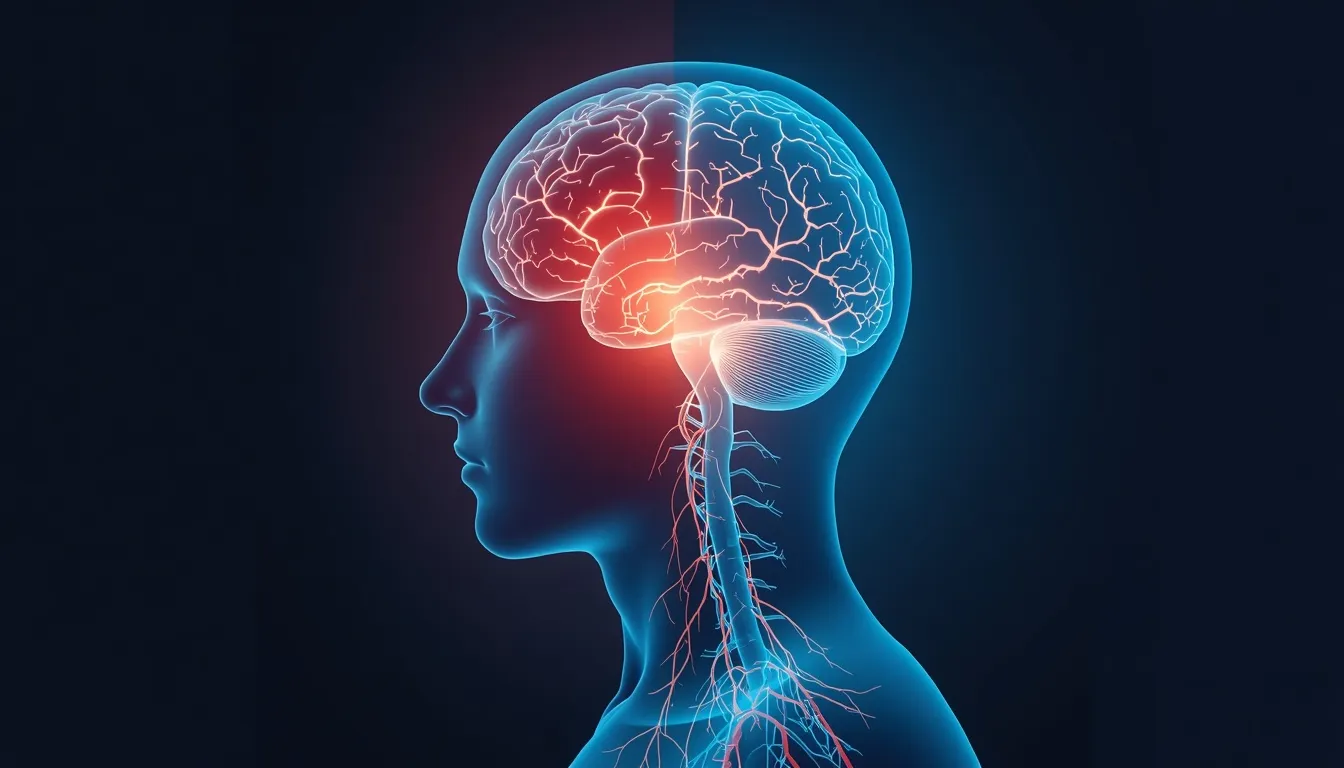
The HPA axis (hypothalamic-pituitary-adrenal axis) is the body’s central stress-response system. In a healthy stress response, a threat triggers the release of cortisol and adrenaline, the heart rate rises, the senses sharpen, and once the threat passes, the body returns to baseline. This system is essential, it’s what lets a person jump out of the way of a car or push through a work deadline.
In someone who has lived through prolonged, inescapable trauma, this system can get stuck in the “on” position, or become dysregulated in the opposite direction, producing abnormally low cortisol at rest. Either pattern reflects a stress-response system that never fully recalibrated. Over years, this dysregulation contributes to inflammation, disrupted sleep, blood sugar imbalances, and elevated blood pressure.
Allostatic Load: When the Stress Response Never Turns Off
Allostatic load is the term researchers use for the cumulative physiological “wear and tear” that builds up when the stress-response system is activated too often, for too long, without adequate recovery. Coined by neuroscientist Bruce McEwen, the concept helps explain why chronic stress, the kind that defines C-PTSD, doesn’t just feel exhausting; it leaves measurable biological fingerprints.
Multiple systematic reviews have linked high allostatic load to a meaningfully increased risk of both all-cause mortality and cardiovascular death. In people specifically diagnosed with PTSD, research has found that greater cumulative trauma correlates with higher allostatic load and higher cardiovascular risk compared to trauma-exposed people without PTSD, suggesting it isn’t the traumatic event alone, but the unresolved, chronic activation of the stress response afterward, that drives the physical toll.
Physical Health Conditions Linked to Complex PTSD
Research associates chronic, unresolved trauma exposure with a higher likelihood of:
- Cardiovascular disease, including hypertension and elevated heart attack risk
- Autoimmune and inflammatory conditions
- Chronic pain syndromes, including fibromyalgia and unexplained pain
- Metabolic syndrome and type 2 diabetes
- Sleep disorders and chronic insomnia
- Weakened immune function, leading to more frequent illness
- Accelerated cellular aging markers, such as shortened telomeres, observed in some studies
It’s worth repeating: these are elevated risks, observed across large populations, not guarantees for any one individual. Genetics, social support, access to care, and the specific therapies a person receives all shape the outcome dramatically.
Beyond the Body: The Psychological and Relational Toll
Physical health is only part of the picture. C-PTSD’s impact on daily functioning and relationships carries its own health consequences, partly because isolation and unmanaged emotional distress are themselves risk factors for poor physical outcomes.
Emotional Dysregulation and Hypervigilance
Many people with C-PTSD live with a nervous system that is chronically braced for danger, a state clinicians call hypervigilance. This can look like an exaggerated startle response, difficulty relaxing even in objectively safe environments, or emotional reactions that feel disproportionate to the present moment. Alongside this often sits emotional dysregulation: intense mood swings, difficulty self-soothing, or swinging between emotional flooding and numbness.
Isolation and the Relational Toll
Because C-PTSD frequently originates in relationships, a caregiver, a partner, an institution, it often disrupts a survivor’s ability to trust and stay connected to others. This can lead to isolation, difficulty maintaining friendships or romantic partnerships, and a persistent sense of being fundamentally different from other people. This matters for the life-expectancy conversation, too: social connection is one of the most well-documented protective factors against early mortality, so when trauma erodes relationships, it removes one of the body’s natural buffers against chronic stress. If this pattern feels familiar, our guide to complex PTSD and relationships explores how these dynamics form and how they can be repaired.
Does Complex PTSD Actually Shorten Life Expectancy? What the Research Really Says
Here is the most honest answer available: there is no single, definitive study stating that a diagnosis of Complex PTSD reduces life expectancy by a specific number of years. What exists is a strong, consistent body of evidence connecting chronic, unresolved trauma and its physiological aftermath, allostatic load, HPA-axis dysregulation, inflammation, to elevated risk for the conditions that most commonly shorten life: cardiovascular disease, diabetes, substance use disorders, and suicide.
A few important caveats change the emotional weight of this considerably:
- Risk factor, not destiny. Elevated risk means a higher probability across a population, not a fixed outcome for any individual.
- Comorbidities do a lot of the work. Much of the excess health risk associated with trauma is mediated by depression, substance use, smoking, and disrupted sleep, all of which are treatable.
- Treatment changes the data. Studies on trauma-focused treatment consistently show improvements in the very biomarkers, cortisol patterns, inflammatory markers, blood pressure, that drive long-term risk.
- The research is population-level. Large studies describe averages across thousands of people; they cannot predict what will happen to any one individual.
In short: complex PTSD is a legitimate risk factor for a shorter, harder life if it goes unaddressed for decades. It is not an unchangeable diagnosis, and it is absolutely not a countdown clock.
The Good News: Neuroplasticity and the Reversibility of Trauma’s Physical Toll
This is where the story turns hopeful, and where the science is just as solid as the risk data.
Neuroplasticity: The Brain Can Rewire
Neuroplasticity is the brain’s lifelong capacity to form new neural connections and reorganize existing ones in response to new experiences. For decades, trauma was thought to leave permanent scarring in structures like the amygdala and hippocampus. Modern neuroscience tells a more encouraging story: with consistent, appropriate intervention, the brain’s fear circuitry can recalibrate, the prefrontal cortex, responsible for emotional regulation and rational thought, can regain more influence over the amygdala’s alarm response, and the nervous system can learn, often for the first time, what safety actually feels like.
How Trauma-Informed Therapy Reverses the Physical Toll
Trauma-informed treatment doesn’t just address mood and memory; it measurably changes the physiology described earlier in this article. Approaches such as EMDR, Cognitive Processing Therapy, Internal Family Systems, and somatic-based modalities have been shown in research to lower cortisol reactivity, improve heart-rate variability (a marker of nervous-system resilience), and reduce inflammatory markers over the course of treatment. Working with a qualified clinician, including through online therapy for trauma and PTSD, which has made consistent, specialized care far more accessible for survivors who can’t find local specialists, gives the nervous system the repeated, safe experiences it needs to recalibrate.
Somatic Regulation and Nervous System Healing
Because trauma is stored not just in memory but in the body’s physiological patterns, talk therapy alone is often not enough. Somatic regulation, techniques that work directly with the nervous system through breath, movement, grounding, and body awareness, helps interrupt the chronic activation described earlier under allostatic load. Practices like polyvagal-informed therapy, yoga, and titrated body-based trauma processing (as used in Somatic Experiencing) give survivors a felt sense of safety, not just an intellectual understanding of it, which is often what finally allows the stress-response system to power down.

Practical Steps to Protect Your Health While You Heal
Alongside professional treatment, several everyday practices support the same biological systems that chronic trauma disrupts:
- Prioritize consistent sleep, sleep is when the body regulates cortisol and repairs itself; irregular sleep compounds HPA-axis dysregulation.
- Move your body regularly, even moderate exercise measurably lowers baseline cortisol and improves cardiovascular markers over time.
- Rebuild social connection at your own pace, even one or two trusted relationships significantly buffer stress physiology.
- Schedule routine health screenings, cardiovascular and metabolic screenings catch early warning signs before they become chronic disease.
- Reduce reliance on numbing behaviors, alcohol, nicotine, and excessive stimulant use all add to allostatic load rather than relieving it long-term.
- Practice nervous-system regulation daily, even in small doses, consistency matters more than duration.
When to Seek Professional Support
If you recognize yourself in this article, chronic hypervigilance, emotional flooding, a pattern of difficult relationships, or physical symptoms that haven’t responded to standard medical treatment, it’s worth speaking with a trauma-informed clinician. A licensed therapist can properly assess whether C-PTSD, PTSD, or another condition best explains your experience, and can help build a treatment plan suited to your specific history and physical health picture.
Frequently Asked Questions
What are the 17 symptoms of complex PTSD?
Clinicians typically describe C-PTSD through the core PTSD symptom clusters, intrusive memories, avoidance, and hyperarousal, plus the additional “disturbances in self-organization”: emotional dysregulation, a negative self-concept, and relationship difficulties. Different clinical resources break these broader categories down into as many as 17 individual symptom descriptions, but they all cluster around these core domains.
Is complex PTSD the same as regular PTSD?
No. Both involve re-experiencing, avoidance, and hyperarousal after trauma, but C-PTSD adds persistent difficulty with emotional regulation, self-worth, and relationships, and it typically follows prolonged or repeated trauma rather than a single incident.
Does complex PTSD ever go away?
C-PTSD symptoms can improve significantly, and many people reach a point where symptoms no longer meet diagnostic criteria or interfere with daily life. “Fully going away” looks different for each person, but meaningful, measurable recovery, including in physical health markers, is well documented with appropriate treatment.
Is complex PTSD considered a disability?
In some cases, when symptoms significantly impair a person’s ability to work or function, C-PTSD can be recognized as a disability for legal or workplace-accommodation purposes. This determination depends on individual severity and the specific legal framework involved, so it’s worth discussing with both a clinician and, if relevant, a disability attorney.
Can complex PTSD be cured?
“Cured” isn’t the framing most clinicians use, but substantial, lasting remission of symptoms is achievable for many people with sustained, trauma-informed treatment. The goal of treatment is typically a nervous system that can accurately distinguish safety from danger, and a life no longer organized around past trauma.
Does having complex PTSD mean I will die younger?
No single diagnosis determines an individual’s lifespan. C-PTSD is associated with elevated population-level health risks tied to chronic stress, but treatment, healthy lifestyle changes, and strong social support substantially reduce that risk over time.
Medical Disclaimer & E-E-A-T AttributionThis article is for educational purposes and does not replace personalized medical or psychological advice. If you are recovering from a brain injury, trauma, or a mental health condition, work with a licensed clinician to build a plan suited to your situation. Written by: Adil Farooq, Psychiatry Magazine Medically reviewed by: [Dr. Adil Farooq MS · PhD] · Updated: 2026 |