Quick AnswerTime blindness in ADHD is a neurobiological deficit characterized by a reduced ability to sense time passing, accurately judge task duration, or feel the tangible difference between “in five minutes” and “in five hours.” While not a formal DSM-5-TR diagnosis, coined initially by psychologist Dr. Russell Barkley, it remains one of the most highly reported and disruptive executive-function symptoms among adults and children with ADHD, tied directly to measurable differences in dopamine signaling and prefrontal cortex activity. |
You sat down to “quickly” check one single email. Four hours later, you surface, disoriented, with a missed meeting, a cold coffee, and no real memory of where the time actually went. It wasn’t laziness. It wasn’t a lack of caring or professionalism. For many adults dealing with the daily reality of executive dysfunction experienced in ADHD, this is simply what an ordinary Tuesday feels like. This recurring, often deeply frustrating pattern is known as time blindness ADHD, representing one of the most profoundly disruptive and least understood elements of living with a neurodivergent brain.
This comprehensive guide breaks down what time blindness actually is, the neurological reasons the ADHD brain experiences time so differently, how it creates friction at work and in relationships, and the evidence-based strategies and specific tools that genuinely help manage it.
What Is Time Blindness in ADHD? (And Is It a Real Diagnosis?)
Time blindness describes the fundamental inability to intuitively sense how much time has passed or how much time remains before a deadline. For neurotypical individuals, time operates almost like a sixth sense, a background, automatic awareness that gently signals, “I’ve been doing this for a while,” or, “I need to leave in fifteen minutes.” For people with ADHD, that internal interval timer is often profoundly unreliable or entirely absent.
This does not mean someone experiencing time blindness ADHD cannot read a clock. What is impaired is the felt sense of time. Without that internal biological signal, time tends to collapse into only two abstract categories: “Now” and “Not Now.”
It is vital to be precise about clinical terminology. Time blindness is not a standalone diagnosis and does not appear in the Diagnostic and Statistical Manual of Mental Disorders (DSM-5-TR). Leading ADHD researcher and psychologist Dr. Russell Barkley popularized the term in the 1990s, often describing it as “temporal myopia”, a nearsightedness applied to time, where anything not happening right in this exact moment is impossible to bring into clear focus. Today, clinicians utilize the term as a descriptive shorthand for a highly measurable pattern of executive dysfunction.
“The most common friction point I see in my practice isn’t that patients don’t care about being late,” notes Dr. [Reviewer Name], a board-certified psychiatrist with the Psychiatry Magazine Medical Review Board. “It is that the anxiety of time blindness creates a cognitive gridlock. The brain cannot accurately sequence the time required to stop one task and start another, which often paralyzes their ability to transition at all.”
The Neurobiology: What Causes Time Blindness in ADHD?
This temporal disconnect is not a standalone quirk; it is the downstream effect of several overlapping neurological differences. Generative research into the ADHD brain points to a highly specific, distributed neural network governing how we process duration.
Dopamine and the Brain’s Internal Clock
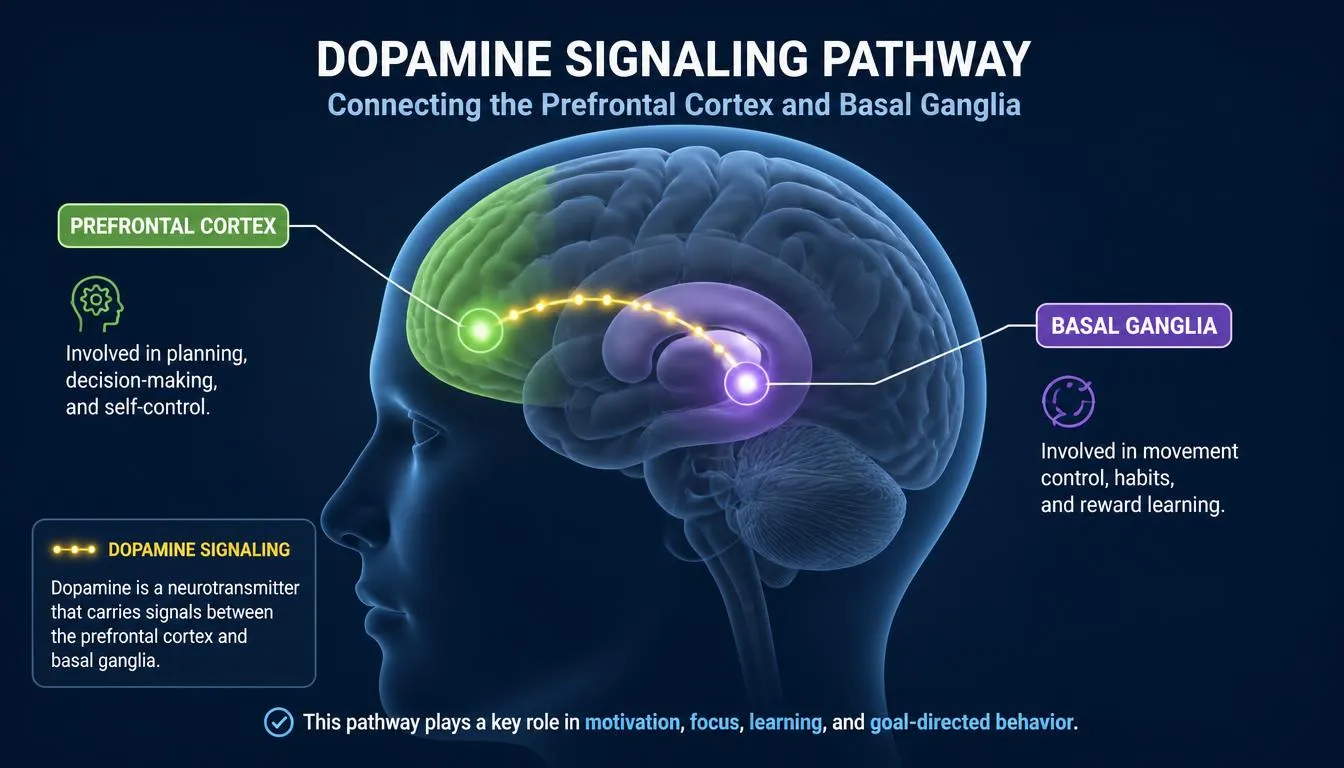
Time perception relies heavily on the prefrontal cortex and the basal ganglia, along with the dopamine signaling that connects them. Current functional-imaging studies indicate that an internal “interval timer” helps humans intuitively judge elapsed time. This timer requires consistent, steady dopamine signaling to run accurately.
Because ADHD involves atypical dopamine regulation, this internal clock stutters. During high-stimulation, dopamine-rich activities, the clock speeds up, causing hours to feel like minutes. During low-stimulation tasks, the clock drags heavily. This same variability in neurotransmitter function is closely linked to the emotional dysregulation many adults with ADHD face, and psychiatric researchers increasingly treat these as intertwined symptoms of a broader self-regulation deficit.
Working Memory Deficits
Estimating how long a task will take requires holding several pieces of dynamic information in your working memory at once: the start time, current time, physical progression of the task, and the end goal. ADHD heavily restricts working memory capacity. As a result, the brain simply “drops” the ongoing time calculation to free up cognitive bandwidth for the task itself.
Temporal Discounting
The ADHD brain consistently weights immediate rewards far heavier than delayed outcomes, a bias researchers call temporal discounting. A major presentation due in three weeks offers zero immediate dopamine reward for starting today, so it remains psychologically weightless. It stays securely in the “Not Now” category until the deadline collapses into “Now,” forcing a high-adrenaline, cortisol-driven scramble to finish.
What Time Blindness Looks Like in Real Life
Time blindness ADHD manifests distinctly depending on the environmental trigger. Three common scenarios illustrate the profound difference between a neurotypical time sense and temporal myopia:
The Hyperfocus Time Warp A software developer sits down at 9:00 a.m. to fix “one quick line of code” before a morning meeting. She surfaces at 1:30 p.m., having missed two critical meetings entirely. She has no clear memory of the intervening four and a half hours beyond a vague sense of being deeply absorbed. She wasn’t ignoring her calendar; the calendar simply ceased to exist in her reality once she was inside the task.
Transition Paralysis A father is consistently late picking up his children, despite setting an alarm for the exact departure time. The alarm sounds mid-task. Because the task doesn’t feel finished, he mentally negotiates for “two more minutes.” Because his internal sense of those two minutes is broken, it reliably becomes twenty minutes. Often, this exact mechanism drives ADHD paralysis, where the inability to sequence time makes starting or stopping a task feel physically impossible.
The Planning Fallacy A graduate student has a thesis draft due in a month. For the first 27 days, the deadline feels abstract and generates zero biological urgency. On day 28, the deadline suddenly feels violently close. The student spends 48 sleepless hours finishing the draft. This happens not because they didn’t care earlier, but because “four weeks away” and “three days away” occupy the exact same mental space in a time-blind brain.
Time Blindness vs. Poor Time Management
It is easy to dismiss time blindness ADHD as ordinary disorganization, but there is a structural, clinical difference. Poor time management is fundamentally a skills gap. A person simply hasn’t learned effective planning strategies, and with standard planner training and practice, their punctuality improves linearly.
Conversely, time blindness is a perceptual gap. A person can understand exactly how a calendar works, actively intend to be early, and still consistently misjudge reality because their underlying felt sense of time is generating false data. This is exactly why generic, neurotypical productivity advice completely fails individuals with ADHD. The planner works, but only when paired with external sensory systems that replace the broken internal clock.
Is Time Blindness Unique to ADHD?
While time blindness is most robustly associated with ADHD, this form of temporal myopia is not strictly exclusive to it. The prefrontal circuitry that governs time perception is highly sensitive, meaning individuals diagnosed with Autism Spectrum Disorder (ASD), Severe Generalized Anxiety Disorder, Major Depressive Disorder, or those recovering from a Traumatic Brain Injury (TBI) can experience a remarkably similar felt sense of lost time. Understanding this differential is critical. A patient with an overlapping neurodivergent profile or a comorbid mood disorder may find that their time blindness responds uniquely to a combined therapeutic approach, making accurate clinical evaluation far more reliable than self-diagnosis.
Evidence-Based Strategies to Manage Time Blindness ADHD
You cannot cure a perceptual difference through sheer willpower, but you can build a highly resilient environment around it. The goal is to aggressively outsource your sense of time to your physical environment.
- Externalize the Clock Visually Because the internal timer is unreliable, replace it with sensory data. Digital clocks require the brain to perform math to understand duration. Analog clocks, or specifically designed visual timers, show time as a shrinking wedge of color. This allows the brain to literally see time depleting, creating the biological urgency that static numbers fail to generate.
- Implement a 50% Buffer Time Rule People with ADHD suffer from chronic underestimation of task length. Stop guessing how long a task will take. Instead, time yourself doing routine tasks to establish hard, factual data baselines. Once you have a baseline, automatically pad all future estimates by 50%. If a task historically takes 20 minutes, block out 30 minutes. This is not inefficiency; it is a required calibration for a known neurological bias.
- Deploy Point-of-Transition Alarm Chains A single alarm set for the exact moment of departure will fail. An alarm at 3:00 p.m. to leave at 3:00 p.m. provides the ADHD brain with zero cognitive runway to disengage from hyperfocus. Instead, use an “alarm chain”: set alarms for 30 minutes, 15 minutes, and 5 minutes prior to the transition. This progressively breaks the hyperfocus cycle and pulls you back into real-time awareness.
- Ground Abstract Goals with the 24-Hour Rule Because abstract future deadlines do not compute well, you must pull them into the immediate present. When assigned a long-term project, leverage frameworks like the 24-hour rule for ADHD to force immediate, near-term action on a small scale, preventing the task from floating endlessly in the abstract void.

Tools That Actually Help
To successfully externalize your clock, industry-standard tools are highly effective when integrated into daily routines. The Time Timer, for example, acts as the gold standard for visual time management by using a red physical disc that disappears as time elapses, completely removing the cognitive load of calculating minutes. For digital planning, Tiimo is an application designed specifically for neurodivergent brains, utilizing a color-coded, continuous timeline that visually guides users through transitions like an external executive function engine. Finally, passive tracking applications like RescueTime run quietly in the background of your devices to log exactly how your time is actually spent, providing the hard empirical data needed to defeat the planning fallacy without relying on flawed memory.
When to Seek Professional Help
If time blindness ADHD is actively degrading your quality of life, resulting in chronic job reprimands, escalating conflict with romantic partners, or a persistent, heavy sense of shame despite genuine efforts to improve, it is time to seek clinical support.
A board-certified psychiatrist or specialized ADHD therapist can provide executive function scaffolding, such as Cognitive Behavioral Therapy (CBT), to dismantle the shame cycle. Furthermore, for many patients, stimulant and non-stimulant medications can meaningfully improve baseline prefrontal cortex activation, providing the necessary neurological foundation for these behavioral tools to finally take hold.
Frequently Asked Questions (FAQ)
Is time blindness a real symptom of ADHD?
Yes. Time blindness is widely recognized among medical researchers and clinicians as a core executive-function symptom of ADHD, rooted in measurable differences in dopamine signaling and prefrontal cortex connectivity, rather than a lack of discipline.
Who coined the term time blindness?
Dr. Russell Barkley, a leading clinical psychologist and ADHD researcher, popularized the term in the 1990s. He also frequently uses the term “temporal myopia” to describe how the ADHD brain struggles to focus on future events.
Can you have time blindness without having ADHD?
Yes. While it is a hallmark of ADHD, persistent time blindness can also occur in individuals with Autism Spectrum Disorder (ASD), severe anxiety, depression, and traumatic brain injuries, as all of these impact the brain’s executive functioning networks.
Why does time feel like it completely disappears during hyperfocus?
During hyperfocus, the brain receives a massive influx of dopamine from an engaging activity. This high level of stimulation effectively overrides and shuts down the brain’s already-weakened internal interval timer, rendering you completely “blind” to time until an external force interrupts you.
Does time blindness get better with age?
While general executive function does mature somewhat into early adulthood, time blindness typically remains a lifelong neurodevelopmental trait. It does not naturally disappear, but its impact can be heavily mitigated through specialized tools and active management.
Can ADHD medication completely fix time blindness?
Medication can significantly improve overall executive function and focus, but it rarely cures time blindness entirely. Patients achieve the best outcomes by combining proper pharmacological treatment with external structuring strategies, such as visual timers and alarm chains.
Is time blindness just an excuse for procrastination?
No, they are distinct psychological processes. Procrastination involves the conscious delay of an aversive task, whereas time blindness involves a literal inability to accurately sense how much time is passing, meaning a person can genuinely intend to be on time and still be entirely caught off guard.
Why do I lose track of time so severely on my phone?
Smartphones and social media algorithms are engineered to deliver variable, unpredictable dopamine rewards. For a dopamine-starved ADHD brain, this highly stimulating environment instantly shuts down external time awareness, making screens a primary trigger for time blindness.
Does time blindness affect children differently than adults?
Children generally exhibit time blindness through missed homework deadlines, prolonged tantrums during transitions, and dawdling in the morning. Adults experience the exact same neurological mechanism, but in higher-stakes environments like maintaining careers, finances, and marriages, making the adult consequences much more severe.
Medical Disclaimer & E-E-A-T AttributionThis article is for educational purposes and does not replace personalized medical or psychological advice. If you are recovering from a brain injury, trauma, or a mental health condition, work with a licensed clinician to build a plan suited to your situation. Written by: Adil Farooq, Psychiatry Magazine Medically reviewed by: [Dr. Adil Farooq MS · PhD] · Updated: 2026 |