You look in the mirror after a brutal few weeks at work and barely recognize your own face. It looks puffier, rounder, somehow tired in a way that sleep isn’t fixing. Social media has a name for this: cortisol face. The term has spread quickly, with people attributing sudden facial changes to their stress hormone levels rather than aging or diet.
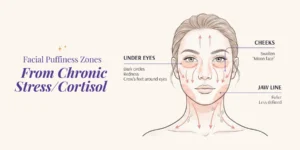
But how much of cortisol face is genuine physiology, and how much is internet oversimplification of something more complicated? Understanding what’s actually happening can help you separate useful insight from social media noise.
What Is Cortisol Face?
Cortisol face is a popular, non-clinical term describing facial puffiness, rounding, or fullness that some people attribute to chronically elevated cortisol, the hormone released by the adrenal glands in response to stress.
It is not a formal medical diagnosis. You will not find “cortisol face” in a dermatology textbook or a psychiatric manual, but the underlying physiological concept it points to is grounded in real, well-studied hormonal science.
The term has become especially popular on platforms like TikTok and Instagram, where creators describe waking up with a rounder, puffier face during stressful periods and connect it directly to their cortisol levels, sometimes alongside supplement or skincare recommendations.
Separating the legitimate physiology from the oversimplified social media narrative is important, since cortisol does affect the body in real, measurable ways, even if the popular framing sometimes overstates how directly and immediately it changes someone’s facial appearance.
The Real Science Behind Cortisol and the Body
Cortisol is a hormone produced by the adrenal glands, and it plays a central role in the body’s stress response, helping regulate blood sugar, blood pressure, inflammation, and metabolism throughout the day.
Under normal circumstances, cortisol follows a daily rhythm, peaking in the morning to help you wake up and gradually declining throughout the day and evening as part of a healthy sleep-wake cycle.
Chronic stress can disrupt this natural rhythm, keeping cortisol elevated for longer periods than the body’s system was designed to sustain, which research links to a range of physical effects over time.
One well-documented physiological effect of significantly elevated cortisol is fluid retention and changes in fat distribution, both of which can affect facial appearance, particularly in cases of genuinely severe or prolonged elevation.
Why Chronic Stress Can Affect Facial Appearance
Elevated cortisol can contribute to water retention throughout the body, including in the face, since cortisol influences how the kidneys manage sodium and fluid balance.
Cortisol also affects fat distribution patterns, and in cases of significantly and chronically elevated cortisol, such as in the medical condition Cushing’s syndrome, this can produce a distinctly rounded facial appearance sometimes referred to clinically as “moon face.”

It’s important to note that Cushing’s syndrome represents a severe, diagnosable medical condition involving cortisol levels far beyond what typical everyday stress produces, and most people describing “cortisol face” from stress alone are not experiencing anything close to this level of hormonal elevation.
For the average person under significant but non-clinical stress, facial changes are more likely tied to a combination of factors working together, including poor sleep, increased alcohol consumption, dietary changes, and general inflammation, rather than cortisol acting as the sole or primary cause.
Is “Cortisol Face” a Legitimate Medical Term?
No, not in the clinical sense. Dermatologists and endocrinologists do not use “cortisol face” as a diagnostic category, and there is limited direct research specifically studying this exact phenomenon as it’s described on social media.
This doesn’t mean the underlying experience people describe is imaginary. Facial puffiness during stressful periods is a real and reportable phenomenon. What’s less established is the specific, direct causal chain from everyday stress to visible facial changes that many social media posts imply.
Multiple factors tend to overlap during stressful periods, including disrupted sleep, increased salt or alcohol intake, dehydration, and elevated cortisol, which makes it genuinely difficult to isolate cortisol specifically as the single cause of any facial changes someone notices.
Approaching the term with healthy skepticism, while still taking the underlying stress seriously, tends to be the most accurate and helpful stance, rather than either dismissing the experience entirely or over-attributing every facial change to hormones alone.
Other Common Causes of Facial Puffiness
Poor sleep is one of the most well-established contributors to facial puffiness, since inadequate rest affects fluid balance and circulation in ways that are often visible around the eyes and cheeks by morning.
Dietary sodium intake plays a significant role as well, since high salt consumption encourages the body to retain water, which frequently shows up first and most visibly in the face.
Alcohol consumption is another major contributor, both through dehydration and through its broader inflammatory effects on the body, which many people notice reflected in facial puffiness the following morning.
Allergies and sinus congestion can also cause visible facial swelling, particularly around the eyes, and these causes are often mistaken for stress-related changes when the two happen to coincide.
Hormonal fluctuations unrelated to cortisol, including those tied to the menstrual cycle, can independently affect fluid retention and facial appearance, adding yet another variable that’s easy to misattribute to stress alone.
The Psychological Side of “Cortisol Face” Anxiety
Beyond the physiological question, there’s a psychological dimension worth examining, since the popularity of “cortisol face” as a concept has led some people to develop new anxieties specifically about their own appearance during stressful periods.
This can create an unhelpful feedback loop, where worrying about how stress is visibly changing your face becomes its own additional source of stress, potentially compounding the very cortisol elevation the person is concerned about in the first place.
Social media trends around specific physical symptoms of stress can sometimes encourage a kind of hypervigilant self-monitoring, where ordinary and unrelated facial changes get reinterpreted through an anxious lens focused specifically on hormones.
Being aware of this dynamic doesn’t mean dismissing genuine physical changes, but it does mean staying grounded in what’s actually known, rather than assuming every fluctuation in appearance reflects a dramatic hormonal crisis.
How Chronic Stress Affects the Body Beyond Appearance
While facial appearance tends to get outsized attention on social media, chronic elevated cortisol has more significant, well-documented effects on the body that deserve more attention than they typically receive.
Sustained stress has been linked in research to disrupted sleep, changes in appetite and weight, elevated blood pressure, and greater vulnerability to anxiety and depressive symptoms over time.
Immune function can also be affected by prolonged stress, with research suggesting that chronically elevated cortisol may reduce the body’s ability to regulate inflammation effectively over extended periods.
Addressing the underlying stress itself, rather than focusing narrowly on its visible effects on your face, tends to produce far more meaningful improvements to both your physical health and your overall wellbeing.
Evidence-Based Ways to Manage Chronic Stress and Cortisol
Prioritizing consistent, adequate sleep is one of the most effective ways to support healthy cortisol regulation, since sleep deprivation itself is a significant independent driver of elevated stress hormones.
Regular physical movement, even in moderate amounts, has been shown in research to help regulate cortisol patterns over time, though intense overtraining without adequate recovery can sometimes have the opposite effect.
Reducing alcohol and excessive caffeine intake can support both cortisol regulation and overall fluid balance, addressing two of the common contributors to facial puffiness simultaneously rather than treating them as separate issues.
Practicing stress reduction techniques such as deep breathing, mindfulness meditation, or time in nature has research support for helping regulate the body’s stress response system over time, even if the effects aren’t always immediately visible.
Reducing sodium intake and staying adequately hydrated can help address fluid retention specifically, which may offer more direct and immediate improvement to facial puffiness than addressing cortisol alone.
Building consistent social connection and support has also been linked to healthier cortisol regulation, since feeling supported appears to buffer some of the physiological impact of ongoing stress.
How the Cortisol Face Trend Started and Why It Spread So Fast
The term gained widespread traction on social media platforms as part of a broader wave of content connecting everyday physical symptoms to specific hormones, often framed in simplified before-and-after visual comparisons that performed well in short-form video formats.
Part of the appeal lies in offering a single, identifiable explanation for something that feels confusing and out of the person’s control, since attributing facial changes to “cortisol” feels more actionable than accepting a vague combination of sleep, diet, and general life stress.
Creators discussing cortisol face often paired the concept with specific product recommendations, including supplements marketed as “cortisol blockers” or skincare routines claiming to specifically target hormonal puffiness, even though scientific support for many of these specific products remains limited or entirely absent.
This commercial angle is worth keeping in mind, since some of the enthusiasm around the trend has been shaped as much by marketing incentives as by genuine scientific consensus, which is part of why a healthy dose of skepticism serves consumers well here.
None of this means the underlying stress people are experiencing isn’t real or worth addressing. It simply means the specific narrative and proposed solutions circulating online deserve more scrutiny than they typically receive in a fifteen-second video.
Cortisol Face vs General Bloating vs Weight Gain
It’s worth distinguishing cortisol face from two related but distinct experiences that often get lumped together in casual conversation and social media commentary.
General bloating, which can affect the face along with the abdomen and limbs, is frequently tied to dietary factors such as high sodium intake, carbohydrate consumption, or digestive issues, and tends to fluctuate day to day rather than reflecting a stable hormonal pattern.
Genuine weight gain, by contrast, tends to be more gradual and consistent over time, and while chronic stress can indirectly contribute to weight gain through changes in appetite, sleep, and activity levels, it operates through a different and slower mechanism than the rapid puffiness people often describe as cortisol face.
Distinguishing between these experiences matters because the most effective response differs in each case. Addressing sodium and hydration helps with bloating, addressing overall lifestyle patterns helps with gradual weight changes, and addressing chronic stress and sleep helps most directly with the fluid retention associated with sustained cortisol elevation.
Many people experience some combination of all three simultaneously during a genuinely stressful period, which is precisely why isolating “cortisol” as the singular cause of a facial change can oversimplify what’s actually a more layered physiological picture.
What Actually Helps vs What Doesn’t
Sleep, hydration, reduced sodium and alcohol intake, and consistent stress management practices have the strongest evidence behind them for supporting healthy cortisol regulation and reducing associated fluid retention over time.
Regular moderate exercise also has reasonably strong research support, since physical activity helps regulate the body’s stress response system, though this benefit tends to diminish or even reverse with excessive, poorly recovered training, which can itself elevate cortisol further.
Cosmetic interventions such as facial massage, cold rollers, or lymphatic drainage techniques may provide short-term, temporary reduction in visible puffiness by supporting fluid movement, though they don’t address any underlying hormonal cause and their effects tend to be brief.
Supplements marketed specifically as “cortisol blockers” generally lack robust clinical evidence supporting their effectiveness for the general population, and relying on them instead of addressing sleep, diet, and stress directly is unlikely to produce meaningful or lasting results.
The most reliable path forward tends to be unglamorous but effective: consistent sleep, moderate movement, balanced nutrition, and genuine engagement with the sources of chronic stress in your life, rather than a single targeted product or quick fix.
The Role of Diet in Cortisol and Facial Appearance
Diet influences both cortisol regulation and visible fluid retention through several overlapping pathways worth understanding separately.
High sugar and refined carbohydrate intake can contribute to blood sugar fluctuations that indirectly affect cortisol release, since the body’s stress hormone system is closely tied to blood sugar regulation throughout the day.
Processed foods high in sodium remain one of the most direct contributors to visible facial puffiness, often producing a more immediate and noticeable effect than cortisol fluctuations alone, which is why dietary changes frequently bring faster visible results than stress reduction on its own.
Adequate protein and micronutrient intake, including magnesium and vitamin C, has some research support for helping regulate the body’s stress response, though diet alone is unlikely to meaningfully offset the effects of chronic, unaddressed high stress.
Hydration deserves particular attention here, since paradoxically, mild chronic dehydration can prompt the body to retain more fluid as a protective response, meaning that drinking more water, rather than less, often helps reduce rather than worsen facial puffiness.
When Facial Changes Might Signal Something More Serious
While most facial puffiness related to stress is not a medical emergency, certain patterns warrant a conversation with a physician rather than simply attributing changes to everyday stress.
Rapid, significant facial rounding accompanied by other symptoms such as unexplained weight gain, easy bruising, muscle weakness, or purple stretch marks could indicate Cushing’s syndrome or another underlying endocrine condition that requires proper medical evaluation.
Sudden facial swelling on only one side, or swelling accompanied by pain, fever, or difficulty breathing, should be evaluated promptly, since these symptoms can indicate an infection, allergic reaction, or other medical issue unrelated to stress.
If facial changes are causing significant distress or anxiety regardless of the underlying cause, speaking with both a physician to rule out medical causes and a mental health professional to address the anxiety itself can provide a more complete picture of what’s happening.
When to Talk to a Professional
If you suspect your stress levels are significantly elevated and affecting your physical health, whether through your appearance, sleep, weight, or mood, a physician can run appropriate tests to assess your cortisol levels and overall hormonal health.
A mental health professional can help address the underlying chronic stress itself, particularly if it’s tied to anxiety, work pressure, or difficulty setting boundaries in your daily life.
Combining both medical and psychological support tends to produce the most complete picture, since chronic stress is rarely resolved through addressing physical symptoms alone without also addressing the underlying sources of the stress itself.
Frequently Asked Questions
Is cortisol face a real medical condition? Not as a formal diagnosis. It’s a popular, non-clinical term describing facial puffiness some people attribute to stress-related cortisol elevation, though the underlying physiology of cortisol’s effects on fluid retention and fat distribution is well established in medical research.
Can stress alone cause noticeable facial changes? Chronic, significant stress can contribute to facial puffiness through fluid retention and related factors, though for most people, everyday stress alone is unlikely to produce dramatic facial changes without other contributing factors like poor sleep or high sodium intake also being present.
How is cortisol face different from Cushing’s syndrome? Cushing’s syndrome is a diagnosable medical condition involving severe, chronic cortisol elevation that produces a distinctly rounded facial appearance, along with other significant symptoms. Most people describing everyday “cortisol face” are not experiencing anything close to this level of hormonal elevation.
Can reducing stress reverse facial puffiness? For puffiness driven primarily by lifestyle factors like poor sleep, alcohol, and sodium intake, addressing those factors alongside general stress reduction often does improve facial appearance over time, though results vary by individual.
Should I get my cortisol levels tested? If you’re concerned about chronically elevated stress hormones, particularly alongside other symptoms like significant weight changes or fatigue, a physician can order appropriate testing to assess your cortisol levels accurately.
Is worrying about cortisol face itself a problem? It can become one if it leads to persistent anxiety about your appearance or excessive self-monitoring, since that anxiety can itself contribute to stress. Staying informed without spiraling into hypervigilance tends to be the healthiest approach.
A Final Note
Whether or not “cortisol face” holds up as a precise medical concept, the underlying signal is worth listening to. Chronic stress genuinely affects your body, and your appearance is often one of the more visible ways that shows up.
Rather than chasing a specific hormonal explanation, focusing on the fundamentals — sleep, hydration, movement, and genuine stress reduction — tends to support both your health and how you feel in your own skin.
This article is for educational purposes and isn’t a substitute for a full evaluation by a licensed medical or mental health professional. If you’re concerned about chronic stress or unexplained physical changes, consider speaking with a physician or therapist for personalized guidance.