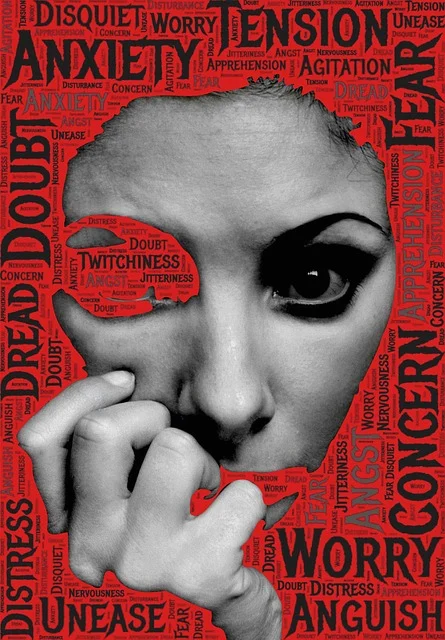
Living with a constant fear of something bad happening can feel exhausting, confusing, and isolating. Even when life appears calm on the surface, your mind may remain stuck in a state of anticipation — waiting for danger, loss, or disaster. This fear often exists without clear evidence, yet it feels deeply real and hard to ignore.

In psychology, this persistent sense of threat is not uncommon. Many people experience it quietly, questioning why they can’t simply “relax” or “stop thinking negatively.” Understanding the psychology behind this fear is the first step toward easing it. This article explores why the mind gets trapped in this pattern, how chronic fear develops, and what actually helps in reducing it — not through force, but through understanding.
What is constant fear of something bad happening?
The constant fear of something bad happening refers to a persistent mental and emotional state where a person expects negative outcomes, even when no immediate danger is present. It’s more than ordinary worry. It’s a background sense of dread that lingers throughout daily life.
Psychologically, this fear sits at the intersection of anxiety, anticipation, and threat perception. The brain behaves as if it must stay alert at all times, scanning for possible problems.
This fear may show up as:
- A sense that “something isn’t right”
- Difficulty enjoying calm moments
- A habit of imagining worst-case scenarios
- Feeling tense even during safe situations
Importantly, this fear doesn’t mean something bad will happen. It means the brain has learned to expect danger as a default.
Why do I always feel like something bad will happen?
Many people ask this question repeatedly, especially when they can’t identify a specific reason for their fear. Psychology offers several explanations.
The brain’s threat system is overstimulated
The human brain evolved to protect us. It constantly evaluates risk. When this system becomes oversensitive, it starts detecting threats where none exist. This keeps the body in a low-level fight-or-flight state.
Hypervigilance becomes a habit
If you’ve spent long periods dealing with stress, uncertainty, or emotional unpredictability, your brain may have learned that staying alert is necessary for survival. Over time, this turns into hypervigilance, where calm feels unfamiliar or unsafe.
Past experiences shape future fear
Experiences such as emotional neglect, sudden loss, chronic stress, or repeated disappointment can train the mind to expect negative outcomes. Even if those experiences are in the past, the nervous system may still react as if they’re ongoing.
Intolerance of uncertainty
Some people struggle deeply with not knowing what will happen next. The mind tries to gain control by imagining outcomes — often negative ones — because uncertainty feels more threatening than imagined danger.
How psychology explains chronic fear
Psychology doesn’t see chronic fear as weakness or overreaction. It sees it as a learned response.
Nervous system dysregulation
When the nervous system stays activated for too long, it loses flexibility. The body struggles to return to a calm baseline, making fear feel constant rather than temporary.
Fear conditioning
The brain learns through repetition. If fearful thoughts are repeated often, the brain strengthens those pathways, making fear automatic.
Cognitive distortions
Certain thinking patterns increase fear, such as:
- Catastrophizing (expecting the worst)
- Overestimating danger
- Underestimating coping ability
- Selective attention to threats
These patterns make the world feel more dangerous than it actually is.
Emotional avoidance
When emotions aren’t processed, they often reappear as vague fear or uneasiness. Suppressing fear doesn’t eliminate it — it keeps it unresolved.
Signs your fear has become chronic
Occasional fear is normal. Chronic fear has a different quality.
Common signs include:
- Feeling tense most of the day
- Constant “what if” thoughts
- Difficulty relaxing or feeling present
- Trouble sleeping due to anticipation
- Avoiding situations to prevent imagined outcomes
- Seeking reassurance but never feeling fully reassured
When fear becomes chronic, it shapes daily decisions, even subtly.
How to deal with chronic fear?
Dealing with chronic fear doesn’t mean eliminating fear completely. Psychology emphasizes regulation, not suppression.
1. Teach your nervous system safety
Fear lives in the body as much as the mind. Gentle practices help signal safety:
- Slow, deep breathing
- Consistent sleep routines
- Light physical movement
- Predictable daily structure
2. Reduce avoidance
Avoidance temporarily lowers fear but strengthens it long-term. Gradually facing feared situations teaches the brain that danger does not always follow discomfort.
3. Build emotional awareness
Naming emotions reduces their intensity. Instead of asking “What’s wrong with me?” ask “What am I feeling right now?”
4. Challenge fearful thoughts
Ask:
- Is this a prediction or a fact?
- What evidence supports this fear?
- How have I handled uncertainty before?
This weakens automatic fear responses over time.
How to stop being scared of something?
Stopping fear doesn’t mean forcing it away. Fear decreases when it no longer feels necessary.
Understand fear’s purpose
Fear is meant to protect, not punish. When you treat fear as an enemy, it often becomes louder.
Practice gradual exposure
Facing fear in small, manageable steps helps the brain relearn safety. This process builds confidence and tolerance.
Reduce reassurance-seeking
Constant reassurance tells the brain danger exists. Learning to sit with uncertainty reduces fear’s power.
Strengthen self-trust
Fear often decreases when you trust your ability to cope, even if things don’t go perfectly.
How to remove fear from your mind?
Psychology is clear on one thing: fear cannot be completely removed from the human mind — and it doesn’t need to be.
Shift from elimination to regulation
Trying to eliminate fear often increases frustration. Instead, focus on:
- Allowing fear to exist without panic
- Letting thoughts pass without engaging
- Returning attention to the present moment
Mindfulness and grounding
Grounding practices help anchor attention in reality rather than imagined futures. This reduces mental spirals.
Reframe your relationship with fear
Fear loses power when it’s no longer treated as an emergency. Calm acknowledgment often softens its intensity.
Can constant fear exist without a diagnosis?
Yes. Many people experience significant fear without meeting criteria for a specific anxiety disorder.
Psychology recognizes that distress exists on a spectrum. You don’t need a diagnosis for your experience to be valid or deserving of support.
Subclinical fear can still:
- Affect quality of life
- Drain emotional energy
- Influence relationships and decisions
Understanding this helps reduce self-judgment.
How constant fear affects daily life
Living with the constant fear of something bad happening can quietly shape behavior.
Relationships
Fear may cause:
- Emotional withdrawal
- Overthinking interactions
- Difficulty trusting stability
Work and focus
Chronic fear consumes mental energy, reducing concentration, creativity, and productivity.
Physical health
Long-term fear increases stress hormones, contributing to fatigue, headaches, muscle tension, and digestive issues.
When fear starts controlling your choices
Fear becomes problematic when it dictates:
- Where you go
- What you avoid
- How you make decisions
- How safe you feel in your own body
At this point, addressing fear becomes less about comfort and more about reclaiming autonomy.
When to seek professional help
Professional support may help if:
- Fear persists for months
- Daily functioning is affected
- Physical symptoms increase
- Self-help strategies bring little relief
Therapy doesn’t mean failure. It means your nervous system needs guidance recalibrating safety.
Conclusion
The constant fear of something bad happening is not a flaw in your character or a sign of weakness. Psychology understands it as a learned response shaped by experience, stress, and survival instincts.
Fear may feel overwhelming, but it is also changeable. With understanding, patience, and the right tools, the mind can relearn safety. Calm isn’t something you force — it’s something you slowly rebuild.
You are not broken. Your mind has simply been trying to protect you — and it can learn a gentler way.