Quick AnswerFluid intelligence is your brain’s raw capacity to reason through unfamiliar problems in real-time, relying on neurological speed and mental flexibility. Crystallized intelligence is the accumulated vocabulary, facts, and skills you have banked through education and experience. While fluid intelligence peaks in your twenties and gradually declines, crystallized intelligence continues to grow well into your late sixties. |
Ask two people to solve a puzzle they have never seen and to define a complex word they have never used, and you are watching two distinct mental engines at work. One runs on pure speed and adaptability. The other runs on memory and established expertise.
In the field of cognitive psychology, understanding the difference between fluid vs crystallized intelligence is essential for mapping how our brains learn, age, and adapt to trauma or stress. Psychologist Raymond Cattell first split types of intelligence into these two components in the 1940s. Today, this distinction is more vital than ever especially as artificial intelligence and digital tools quietly change how much reasoning we outsource.
This comprehensive clinical guide breaks down what these intelligences are, the neuroscience and testing batteries behind them, how they shift across a lifespan, and what current clinical research says about protecting your cognitive health in a digital-first world.
Part 1: Defining the Cognitive Split
What is Fluid Intelligence (Gf)?
Fluid intelligence designated clinically as Gf is your capacity to reason through something entirely new. It is the ability to spot a pattern, adapt to an unfamiliar situation, or solve a problem with no relevant memory to lean on.
Driven heavily by the brain’s prefrontal cortex, fluid intelligence does not depend on what you were taught in school; it depends on how well your brain processes information in the moment. It governs your executive functioning. You call on fluid intelligence when you troubleshoot an app you have never opened, adjust your plans after a sudden disruption, or work through abstract spatial questions on an IQ test.
Core Characteristics of Fluid Intelligence:
- Independent of learning: Operates without prior cultural knowledge or education.
- Speed-dependent: Relies heavily on working memory capacity and rapid neural processing speed.
- Highly flexible: Allows you to hold, manipulate, and evaluate multiple possibilities or variables at once.
- Vulnerable to fatigue: Because it requires intense conscious effort, fluid reasoning degrades quickly under sleep deprivation or acute stress.
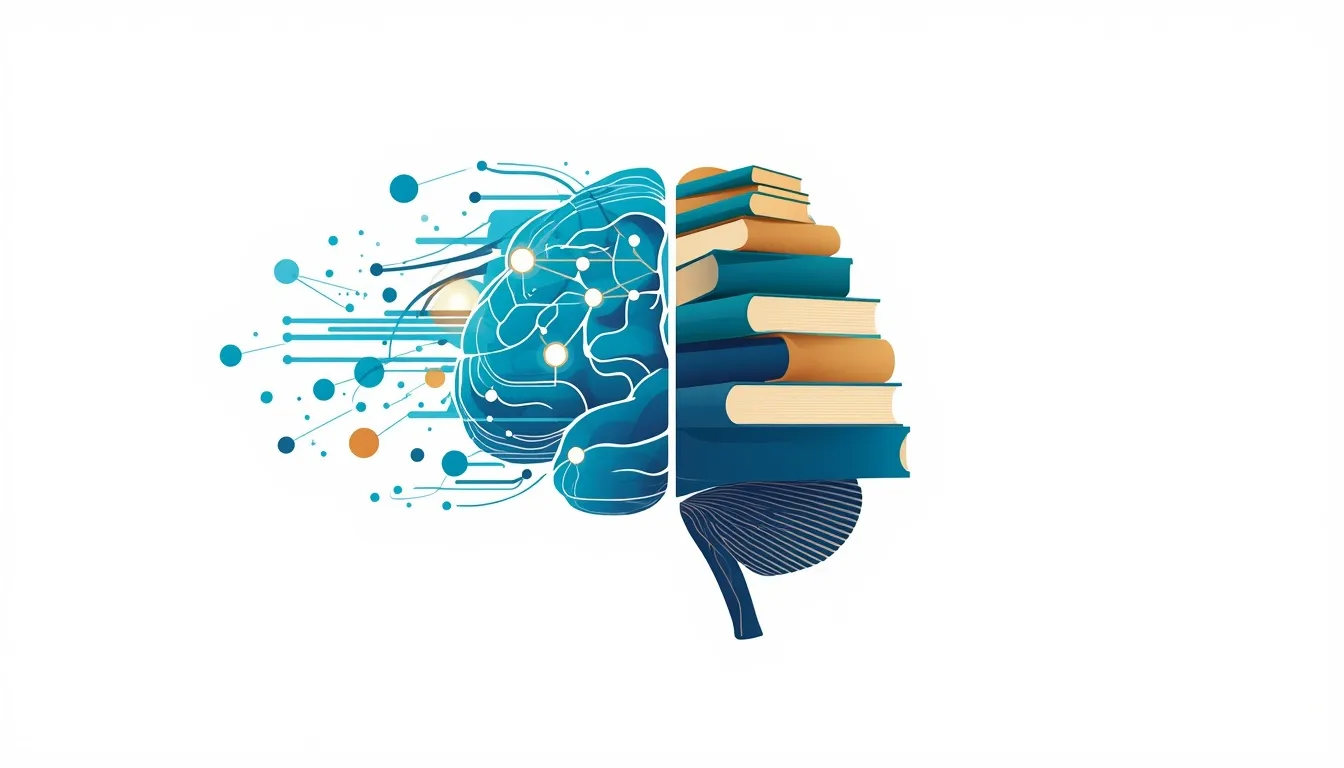
What is Crystallized Intelligence (Gc)?
Crystallized intelligence designated as Gc is the other half of the cognitive equation. It represents everything you have learned and can retrieve on demand.
Supported by the hippocampus and long-term memory storage networks (specifically semantic memory), crystallized intelligence encompasses vocabulary, historical facts, professional expertise, cultural context, and deeply ingrained motor skills. It does not ask you to invent a solution; it asks you to recall one. A physician recognizing a rare complication from decades of clinical cases, or a mechanic naming an engine part by sound alone, is running on crystallized intelligence built through repetition.
Core Characteristics of Crystallized Intelligence:
- Experience-based: Directly tied to formal education, reading comprehension, and cultural exposure.
- Stable and reliable: Requires low mental effort to access once neural pathways are firmly established.
- Quantitative: Easily measured through standardized vocabulary, reading, and trivia-based tests.
- Resilient: Unlike fluid intelligence, crystallized knowledge is highly resistant to fatigue and temporary stress.
Part 2: The Clinical Architecture and Neuroscience
The Cattell-Horn-Carroll (CHC) Theory
Raymond Cattell introduced the initial fluid vs crystallized intelligence distinction, but his student, John Horn, later expanded it into the fuller Gf-Gc theory, recognizing that intelligence was more complex than a simple binary. Decades later, psychologist John Carroll’s separate “three-stratum theory” of cognitive ability was merged with Horn and Cattell’s work.
Together, these form what modern psychologists call the Cattell-Horn-Carroll (CHC) theory.
The CHC theory is the defining framework behind almost all modern cognitive-ability tests. It maps cognitive ability across three tiers:
- Stratum III (General Intelligence or g): The overarching general cognitive ability.
- Stratum II (Broad Abilities): This is where Fluid Intelligence (Gf) and Crystallized Intelligence (Gc) sit, alongside roughly eight other broad abilities like visual processing (Gv), auditory processing (Ga), and processing speed (Gs).
- Stratum I (Narrow Abilities): Over 70 highly specific skills, such as reading decoding or spatial relations.
How Intelligence is Measured in Clinics
If you walk into a psychologist’s office for a comprehensive cognitive assessment, you will likely be administered the WAIS-IV (Wechsler Adult Intelligence Scale) or the Woodcock-Johnson Tests of Cognitive Abilities. These batteries rely strictly on CHC theory to separate your intelligence into actionable data.
- Testing Fluid Intelligence: Clinicians use non-verbal tasks to remove educational bias. You might be asked to complete a Matrix Reasoning test, where you look at a sequence of abstract shapes and identify the missing piece based purely on logic. Block design and figure weights are also used to test raw spatial and fluid reasoning.
- Testing Crystallized Intelligence: Clinicians use the Verbal Comprehension Index. This includes vocabulary tests (defining words of increasing difficulty), general information tests (recalling facts), and similarities (explaining how two seemingly different concepts are related, which requires deep semantic knowledge).
The Neuroscience: Prefrontal Cortex vs. Hippocampus
Modern neuroimaging, such as fMRI scans, shows us exactly where these intelligences live.
When a subject is engaged in a fluid intelligence task, there is massive activation in the dorsolateral prefrontal cortex (dlPFC) and the parietal lobe. These areas are responsible for working memory and attention. Fluid reasoning relies heavily on the integrity of the brain’s white matter the myelin sheaths that insulate nerve fibers and allow electrical signals to travel rapidly.
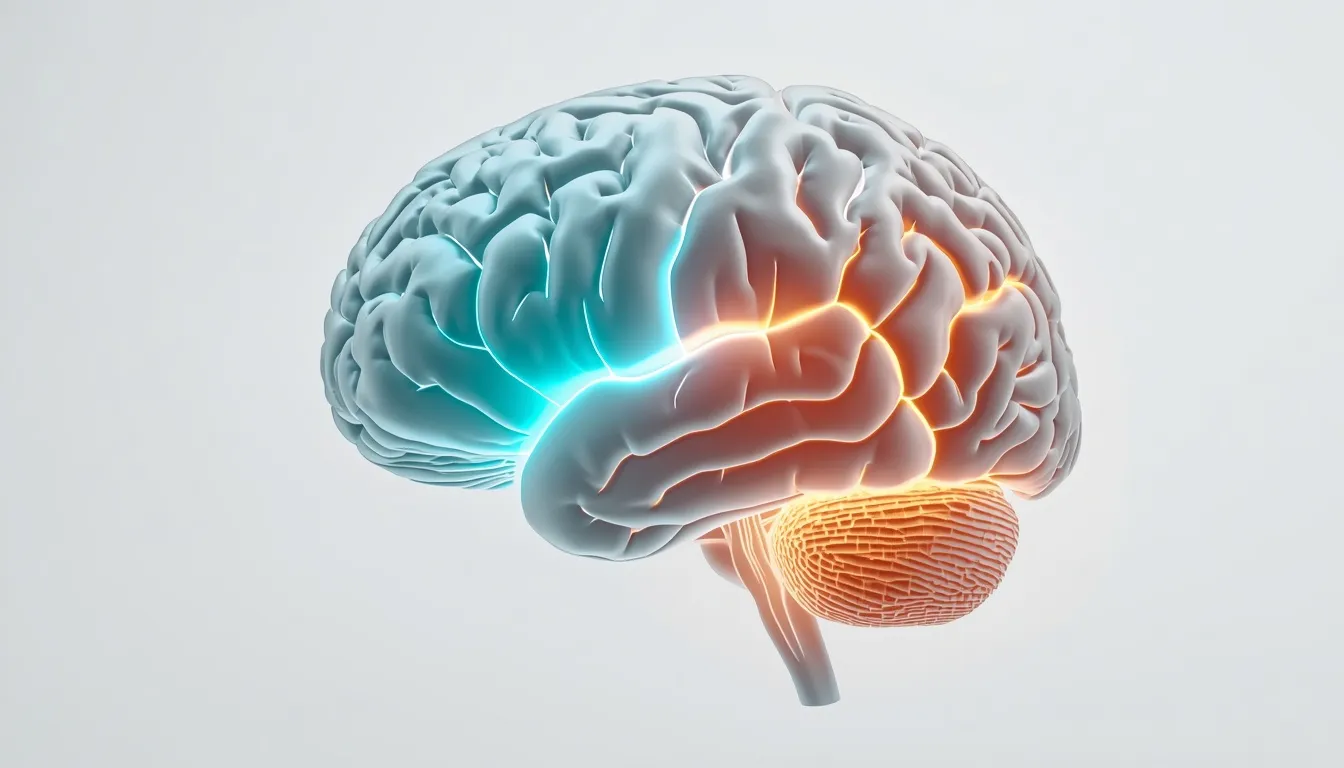
Conversely, crystallized intelligence is heavily distributed across the cerebral cortex and relies on the hippocampus for the initial consolidation of memories. Over time, as facts and vocabulary become deeply crystallized, they are stored throughout the neocortex, meaning they are less reliant on a single brain structure, which explains their incredible stability over time.
Part 3: Fluid vs Crystallized Intelligence in Everyday Life
To truly understand how these systems diverge and collaborate, it helps to see them contrasted side-by-side.
| Feature | Fluid Intelligence (Gf) | Crystallized Intelligence (Gc) |
| What it draws on | Nothing reasoning happens entirely in real-time. | Stored knowledge, vocabulary, and lived experience. |
| Cognitive Character | Fast, flexible, and effortful. | Stable, reliable, and low-effort to access. |
| Neurological Driver | Prefrontal cortex and working memory. | Hippocampus and widespread neocortex. |
| Aging Pattern | Peaks in the 20s, then gradually declines. | Grows steadily into the 60s and 70s. |
| Clinical Testing | Matrix reasoning, spatial logic, block design. | Vocabulary, general information, reading comprehension. |
| Everyday Example | Improvising a solution when a software system crashes. | Recalling the exact steps of a complex diagnostic procedure. |
Real-life thinking rarely draws on only one system. When a student learns to play the piano, fluid intelligence helps them decipher the novel sheet music and coordinate their hands. Over months of practice, that conscious effort becomes hardwired. The ability to play a complex chord progression without thinking transfers into crystallized intelligence. Over years of experience, today’s fluid problem-solving becomes tomorrow’s crystallized expertise.
Part 4: Cognitive Aging and the Lifespan Trajectory
One of the most heavily researched aspects of human intelligence is how it behaves on a chronological timeline. The trajectories of fluid and crystallized intelligence are complete opposites.
The Rise and Fall of Fluid Intelligence
Fluid intelligence grows rapidly as the brain develops throughout childhood and adolescence. It reaches its absolute peak in early adulthood (ages 20 to 30). Because it relies heavily on neurological processing speeds, white matter integrity, and working memory, it naturally begins a slow, gradual decline as we enter our late 30s and 40s.
This biological reality explains why older adults may occasionally experience a slower reaction time when presented with entirely novel technological interfaces or highly abstract, fast-paced puzzles.
The Endless Growth of Crystallized Intelligence
Conversely, crystallized intelligence appreciates over time. As long as an individual continues to learn, read, and engage with their environment, their crystallized knowledge will grow, often not peaking until their late 60s or 70s. This accumulated semantic memory is the scientific foundation of what society traditionally refers to as “wisdom.”
The Impact of Biological Shifts
This timeline is not just about the calendar; hormonal and biological changes can severely impact processing speeds. For instance, many women experience a noticeable, temporary dip in working memory and fluid reasoning due to hormonal brain fog during perimenopause, even while their crystallized knowledge remains completely untouched.
Part 5: The 2026 Factor: AI and “Cognitive Offloading”
This is a critical conversation in modern psychology that did not exist a decade ago. How does our reliance on artificial intelligence impact our raw reasoning skills?
Researchers studying “cognitive offloading” the act of handing routine thinking over to an external digital tool have found that heavy, uncritical reliance on generative AI is linked to weaker independent reasoning. A landmark study published by the MIT Media Lab (evaluating human-AI collaboration via EEG) found that participants who heavily relied on AI assistance during complex tasks showed significantly reduced prefrontal cortex engagement. When later asked to complete similar work unaided, they performed noticeably worse than their non-AI-assisted peers.
Psychologists refer to this phenomenon as “cognitive debt.”
The concern is not the technology itself; it is the fact that bypassing novel problem-solving deprives the brain of the repetitions that fluid intelligence depends on. Just like a physical muscle, fluid reasoning weakens without regular resistance. When you combine this with the reality that digital overstimulation leaves us with less mental bandwidth to begin with, preserving our fluid intelligence requires conscious, deliberate effort.

Part 6: Can You Strengthen Your Intelligence?
Historically, psychologists viewed raw fluid intelligence as a fixed genetic trait. However, modern neuroscience has proven that neuroplasticity the brain’s ability to reorganize itself by forming new neural connections allows for the enhancement of both types of intelligence across a lifespan.
How to Boost Fluid Intelligence
A groundbreaking 2008 study by psychologist Susanne Jaeggi (published in PNAS) demonstrated that structured working-memory training, specifically the “dual n-back” task, measurably raised participants’ fluid reasoning scores. To keep your fluid intelligence sharp:
- Seek Novelty: Learn a genuinely new skill (like a foreign language or complex instrument). Practicing a skill you have already mastered only strengthens crystallized intelligence; fluid intelligence requires the friction of the unknown.
- Manage Stress: Because chronic stress impairs cognitive function by flooding the prefrontal cortex with cortisol, regulating stress is biologically vital for fluid reasoning.
- Protect Your Sleep Architecture: Fluid intelligence is highly dependent on Deep Sleep and REM sleep, where the brain clears out neurotoxins and consolidates working memory.
How to Expand Crystallized Intelligence
Because crystallized intelligence is unconstrained by processing speed, it can grow continuously until the end of life.
- Read Widely: Exposing yourself to complex literature, historical texts, and diverse viewpoints forces your brain to categorize and store new concepts in the semantic memory network.
- Teach Others: The “Feynman Technique” of explaining complex topics to novices forces you to retrieve and organize your stored knowledge, cementing it deeper into your long-term memory.
Final Thoughts: A Lifelong Synergy
Fluid and crystallized intelligence are not competitors; they are complementary systems. Fluid intelligence provides the vital spark to handle what is new, while crystallized intelligence provides the deep foundation to apply what you already know. By embracing lifelong learning, managing your digital habits, and intentionally challenging your brain with novel tasks, you can maintain a sharp, adaptable mind at any stage of life.
Frequently Asked Questions (FAQ)
What is the main difference between fluid and crystallized intelligence?
Fluid intelligence is the ability to reason through unfamiliar problems in real-time without prior knowledge. Crystallized intelligence is the stored knowledge, vocabulary, and skills you apply from memory.
Can fluid intelligence be improved?
Yes. Structured working-memory training (like the dual n-back task), learning genuinely new and complex skills, and maintaining consistent sleep and stress management are scientifically linked to measurable gains in fluid reasoning.
Does crystallized intelligence decline with age?
Generally, no. Crystallized intelligence tends to hold steady or continue rising into a person’s late sixties and seventies, even as fluid processing speed naturally slows down due to aging.
What is an example of fluid intelligence in everyday life?
Improvising a solution when your usual plan falls through such as rerouting a trip after an unexpected road closure, or troubleshooting an unfamiliar software error without a manual is a classic fluid intelligence task.
Is IQ based on fluid or crystallized intelligence?
Most modern clinical IQ tests, like the WAIS-IV, measure both. Verbal and general-knowledge subtests capture your crystallized intelligence, while abstract-pattern and matrix-reasoning subtests capture your fluid intelligence.
What is the Cattell-Horn-Carroll (CHC) theory?
It is the psychological framework built from the research of Raymond Cattell, John Horn, and John Carroll that underlies most modern cognitive-ability testing, organizing roughly ten broad cognitive abilities beneath general intelligence.
Can heavy AI use lower fluid intelligence?
Current clinical research on ‘cognitive offloading’ links heavy, uncritical AI reliance to weaker independent reasoning once the digital tool is removed. Bypassing the effort of critical thinking deprives the brain of the practice required to maintain sharp fluid intelligence.
Which is more important, fluid or crystallized intelligence?
Neither is inherently more important; they are complementary. Fluid intelligence is required to adapt to rapidly changing environments, while crystallized intelligence is necessary for profound expertise, leadership, and long-term wisdom.
| Medical Disclaimer & E-E-A-T Attribution
This article is for educational purposes and does not replace personalized medical or psychological advice. If you are recovering from a brain injury, trauma, or a mental health condition, work with a licensed clinician to build a plan suited to your situation. Written by: Adil Farooq, Psychiatry Magazine Medically reviewed by: [Dr. Adil Farooq MS · PhD] · Updated: 2026 |