Fear is designed to protect us. But when fear becomes overactive, it starts protecting us from things that are not actually dangerous—like social situations, elevators, driving, memories, or even bodily sensations. Exposure therapy is one of the most powerful psychological tools for retraining this overprotective fear system.
Exposure therapy does not force people into danger. Instead, it gently teaches the brain and nervous system that safety is possible again. It works by slowly reducing fear through experience, not just thinking.
What Is Exposure Therapy?
Exposure therapy is a psychological treatment that helps people gradually face what they fear instead of avoiding it. By doing this in a safe, controlled way, the brain learns that the feared situation is not actually dangerous.
Avoidance keeps fear alive. Exposure breaks that cycle.
From a neuroscience perspective, exposure therapy teaches the amygdala—the brain’s fear center—that it no longer needs to activate danger signals when certain triggers appear.
How Exposure Therapy Rewires the Brain
Fear is learned. That means it can be unlearned.
Exposure therapy works through three key processes:
1. Habituation
When you stay in a feared situation long enough, the fear naturally rises and then falls. The nervous system learns that panic does not last forever.
2. Extinction Learning
The brain updates its memory:
“This situation is not dangerous anymore.”
3. Nervous System Safety
With repetition, the body stops reacting as if there is a threat.
Types of Exposure Therapy
There are several forms of exposure therapy, each designed for different fears:
In-Vivo Exposure
Facing real-life situations (like driving or being in public).
Imaginal Exposure
Mentally revisiting feared memories in a safe way.
Interoceptive Exposure
Exposing yourself to physical sensations like a fast heartbeat.
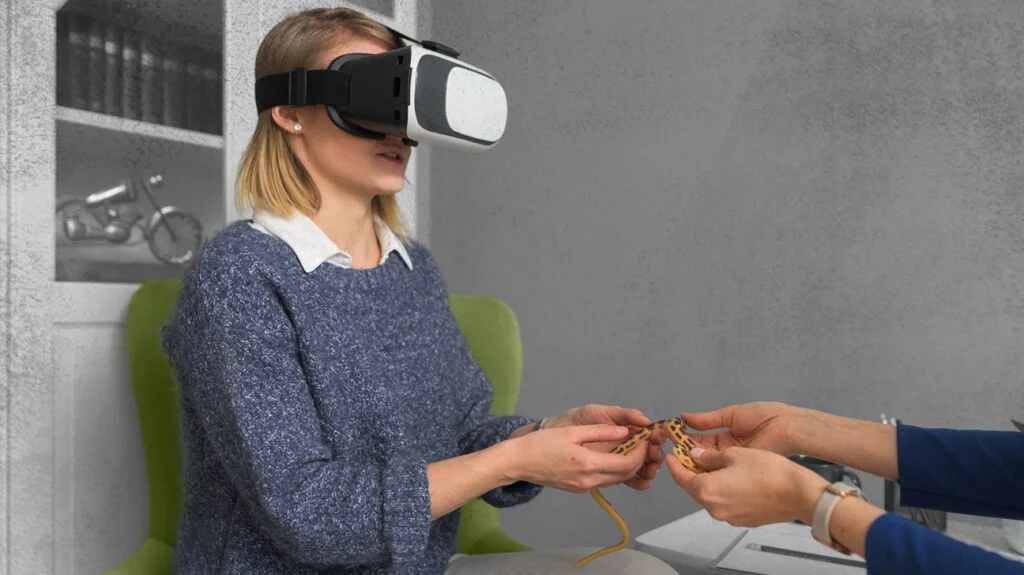
Virtual Reality Exposure
Using technology to simulate feared situations.
All forms work by reducing avoidance and increasing nervous system tolerance.
How to Do Exposure Therapy Correctly
Effective exposure follows a structured approach.
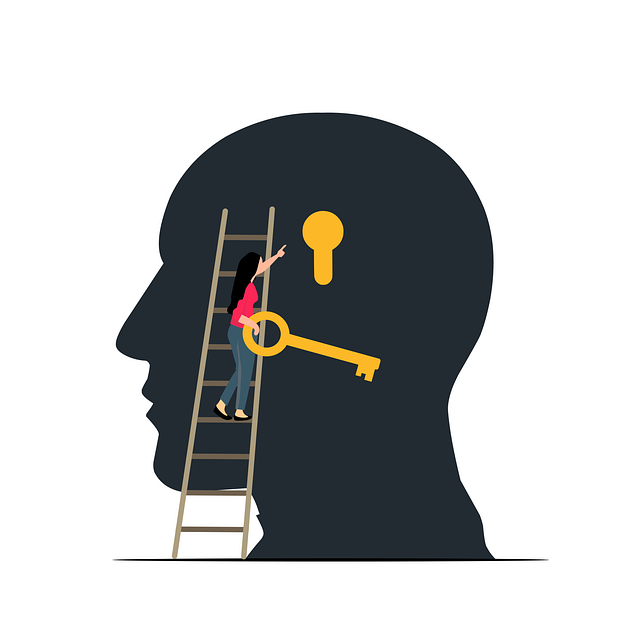
Step 1: Build a Fear Ladder
List feared situations from least scary to most scary.
Step 2: Start Small
Begin with manageable exposures that cause mild discomfort.
Step 3: Stay in the Situation
Stay long enough for fear to peak and then fall.
Step 4: Repeat Often
The brain learns through repetition.
Mistakes to Avoid
- Leaving too early
- Forcing yourself too hard
- Using safety behaviors
Why Exposure Works Better Than Avoidance
Avoidance teaches the brain:
“This is dangerous.”
Exposure teaches the brain:
“I can handle this.”
Every time you face fear without escaping, your brain rewires toward safety.
Is Exposure Therapy Part of CBT?
Yes. Exposure therapy is a core part of Cognitive Behavioral Therapy (CBT).
CBT changes thoughts.
Exposure changes fear at the nervous system level.
Together, they are one of the most effective treatments for anxiety and phobias.
What Conditions Exposure Therapy Treats
Exposure therapy is used for:
- Panic disorder
- Social anxiety
- Phobias
- OCD
- PTSD
- Health anxiety
- Trauma-related fear
It is especially powerful for fear-based conditions.
When Is Exposure Therapy Not Recommended?
Exposure therapy should be modified or delayed if someone has:
- Severe dissociation
- Active trauma flashbacks
- Unstable mental health
- Lack of emotional safety
In these cases, stabilization and nervous system regulation come first.
Emotional Reactions During Exposure
Fear may rise at first. This is normal.
But with time, people notice:
- Fear peaks and fades
- Confidence increases
- The body feels calmer
- Avoidance decreases
How Long Does Exposure Therapy Take?
Some people improve in weeks.
Others take months.
Consistency matters more than speed.
Does Exposure Therapy Work for Everyone?
Most people benefit, but some need trauma-informed or body-based approaches first.
Fear must feel safe to heal.
How to Support Yourself During Exposure
- Slow breathing
- Self-talk
- Gentle movement
- Therapist support
You are training your nervous system, not fighting it.
FAQs
Is exposure therapy safe?
Yes, when done correctly, it is one of the safest and most effective treatments for anxiety.
Does exposure therapy make anxiety worse?
Fear rises at first but decreases with repetition.
Can you do exposure therapy at home?
Mild exposures can be done at home, but guidance helps.
Is exposure therapy part of CBT?
Yes. It is one of CBT’s core techniques.