Anxiety is not just a mental experience — it is deeply rooted in the nervous system. Racing thoughts, tight chest, shallow breathing, dizziness, and a constant sense of danger are signals coming from the body, not just the mind. In recent years, growing attention has focused on one critical pathway connecting the brain and body: the vagus nerve.
The vagus nerve plays a central role in calming the nervous system and bringing the body out of fight-or-flight mode. This is why vagus nerve exercises for anxiety have become increasingly popular among people seeking natural, body-based ways to manage stress and anxious symptoms.
However, online information can be confusing, exaggerated, or even frightening. Some people worry they have “vagus nerve damage” or an “overactive vagus nerve,” while others believe stimulation will instantly cure anxiety. The truth is more balanced — and far more empowering.
What Is the Vagus Nerve?
The vagus nerve is the longest and most complex cranial nerve in the body. The word vagus comes from Latin, meaning wandering — an accurate description of its extensive reach.
Where the Vagus Nerve Goes
The vagus nerve:
- Starts in the brainstem
- Travels through the neck
- Connects to the heart, lungs, stomach, intestines, and other organs
It acts as a two-way communication highway between the brain and the body.
What the Vagus Nerve Does
The vagus nerve is the main component of the parasympathetic nervous system, often called the “rest and digest” system. Its functions include:
- Slowing the heart rate
- Supporting digestion
- Regulating breathing
- Reducing inflammation
- Promoting relaxation and safety
In simple terms, the vagus nerve helps the body feel safe enough to calm down.
How the Vagus Nerve Affects Anxiety
Anxiety is strongly connected to the balance between two nervous system states:
Sympathetic Nervous System (Fight or Flight)
- Increases heart rate
- Tenses muscles
- Sharpens alertness
- Prepares the body for danger
Parasympathetic Nervous System (Rest and Digest)
- Slows heart rate
- Deepens breathing
- Relaxes muscles
- Signals safety
The vagus nerve is the primary brake on the stress response. When vagal tone (the functional strength of the vagus nerve) is low, the body stays stuck in survival mode. Anxiety is not a personal failure — it is a nervous system pattern.
Vagus nerve exercises for anxiety aim to increase parasympathetic activity, helping the body return to balance.
What Does Vagus Nerve Anxiety Feel Like?
Many people describe anxiety related to nervous system dysregulation as feeling “physical,” “out of nowhere,” or “impossible to think away.”
Common sensations include:
- Tight or fluttering chest
- Lump in the throat
- Shortness of breath
- Nausea or stomach discomfort
- Lightheadedness or dizziness
- Sudden waves of fear without a clear cause
Emotionally, vagus-related anxiety can feel like:
- A constant sense of danger
- Difficulty relaxing even when safe
- Overreacting to small stressors
- Feeling disconnected or “on edge”
These experiences are not signs of damage. They are signs that the nervous system is stuck in alert mode and needs regulation, not suppression.
What Are the Symptoms of an Overactive Vagus Nerve?
The term “overactive vagus nerve” is often misunderstood and frequently misused online.
True Vagal Overactivity (Rare)
In medical contexts, excessive vagal stimulation can cause:
- Fainting (vasovagal syncope)
- Sudden drop in heart rate
- Low blood pressure
- Nausea or sweating before passing out
This typically occurs during:
- Blood draws
- Severe pain
- Strong emotional shock
What Most People Experience
Most people with anxiety do not have an overactive vagus nerve. Instead, they have:
- Dysregulated nervous system responses
- Fluctuations between high stress and shutdown
- Heightened body awareness
Anxiety symptoms like dizziness, palpitations, or nausea are not signs of dangerous vagus nerve overstimulation. They are part of the body’s stress response loop.
How Do You Manually Stimulate the Vagus Nerve?
Manual vagus nerve stimulation refers to safe, non-invasive techniques that activate parasympathetic responses naturally. These methods work indirectly by engaging breathing, vocalization, posture, and sensory input.
1. Slow, Extended Exhale Breathing
One of the most effective vagus nerve exercises for anxiety.
How to do it:
- Inhale through the nose for 4 seconds
- Exhale slowly through the mouth for 6–8 seconds
- Repeat for 3–5 minutes
Longer exhales send a powerful “safe” signal to the brain.
2. Humming, Singing, or Chanting
The vagus nerve runs near the vocal cords.
- Gentle humming
- Singing quietly
- Chanting “mmm” or “om”
These vibrations stimulate vagal pathways naturally.
3. Gentle Cold Exposure
Cold signals can activate parasympathetic reflexes.
- Splash cool water on the face
- Hold a cool object to the cheeks
- Avoid extreme cold if sensitive
4. Facial and Neck Massage
Light massage around:
- Jaw
- Cheeks
- Sides of the neck
This engages sensory nerves connected to vagal activity.
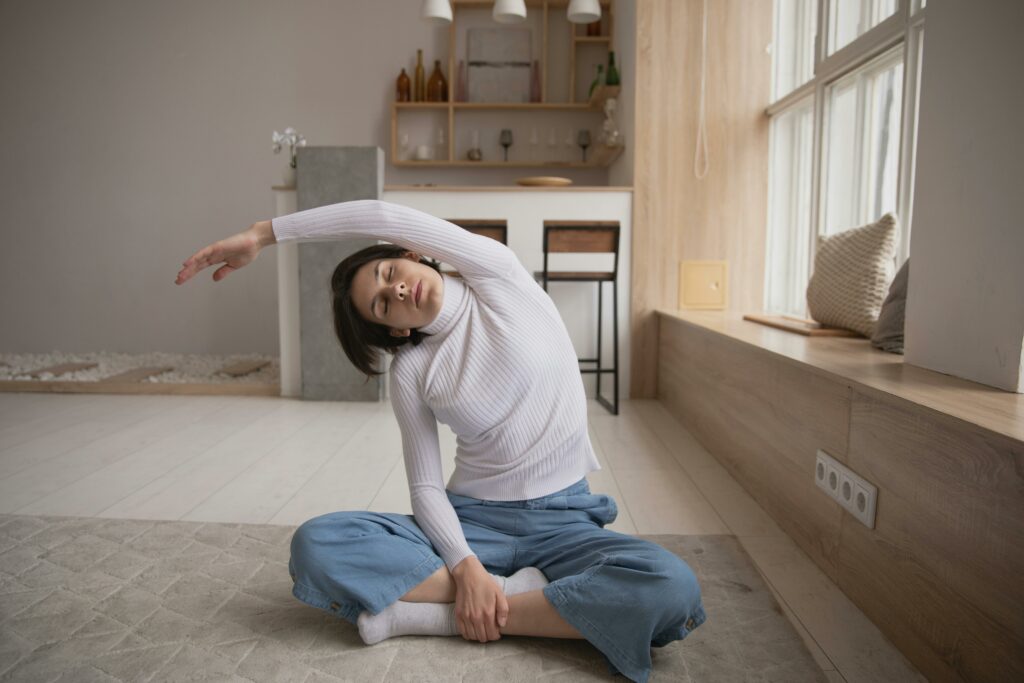
5. Body-Based Grounding
- Slow stretching
- Gentle yoga
- Rocking or swaying
Movement helps release stored tension and regulate nervous system rhythms.
Vagus Nerve Exercises for Anxiety (Step-by-Step)
Below are simple, beginner-friendly exercises designed for daily practice.
Exercise 1: Physiological Sigh
- Inhale deeply through the nose
- Take a quick second sip of air
- Long slow exhale through the mouth
Repeat 3–5 times.
Exercise 2: 5-Minute Vagal Breathing
- Sit comfortably
- Breathe in for 4 seconds
- Breathe out for 7 seconds
Keep the breath smooth and relaxed.
Exercise 3: Humming Break
- Hum gently for 1–2 minutes
- Feel vibration in chest and throat
Great before sleep or during anxious moments.
Exercise 4: Safe Touch
- Place one hand on chest
- One on abdomen
- Breathe slowly
This activates safety signaling through touch.
Polyvagal Theory Explained Simply
Polyvagal theory explains how the nervous system responds to safety and danger.
Three States
- Ventral Vagal (Safe & Connected)
Calm, social, regulated - Sympathetic (Fight or Flight)
Anxiety, panic, hypervigilance - Dorsal Vagal (Shutdown)
Numbness, fatigue, dissociation
Vagus nerve exercises help guide the nervous system back toward safety, not force relaxation.
What Is a Vagus Nerve Cut During Surgery?
This is one of the most misunderstood topics and a common source of fear.
What Is Vagotomy?
A vagotomy is a surgical procedure where parts of the vagus nerve are intentionally cut.
Why Is It Done?
Historically, vagotomy was used to:
- Reduce stomach acid
- Treat severe ulcers
It is rarely performed today and not related to anxiety treatment.
Important Clarification
- Vagus nerve surgery is not a treatment for anxiety
- Anxiety symptoms do not mean your vagus nerve needs cutting
- This procedure has nothing to do with nervous system exercises
If you encounter fear-based content online, it is often misinformation.
Who Should Be Careful with Vagus Nerve Stimulation?
While vagus nerve exercises for anxiety are generally safe, caution is advised if you:
- Have heart rhythm conditions
- Experience fainting episodes
- Have low blood pressure
- Are prone to dizziness
Start gently and stop if you feel unwell. These exercises should feel calming, not intense.
How Long Does It Take to See Results?
Nervous system regulation is not instant.
What to Expect
- Short-term calming effects may appear quickly
- Long-term improvement requires consistency
- Regulation builds gradually like muscle strength
Think in weeks, not minutes.
When to Seek Professional Help
Exercises are helpful, but professional support is important if:
- Anxiety is severe or disabling
- Panic attacks occur frequently
- Symptoms interfere with daily life
- There is trauma history
Therapy helps address the underlying nervous system patterns safely.
Frequently Asked Questions (FAQ)
Can vagus nerve exercises cure anxiety?
No. They help regulate the nervous system and reduce symptoms, not cure anxiety.
Is vagus nerve stimulation dangerous?
Gentle, natural techniques are generally safe when used responsibly.
Why do I feel emotional during these exercises?
Regulation can release stored stress. This is normal.
Conclusion
Anxiety is not weakness. It is a nervous system doing its best to protect you. Vagus nerve exercises for anxiety are not about controlling the body — they are about communicating safety to it.
By practicing gentle breathing, sound, movement, and awareness, you teach your nervous system that it no longer needs to stay on high alert. Progress is gradual, compassionate, and deeply human.
You don’t need to force calm.
You need to create safety.
And that begins in the body.