Waking up unable to move, speak, or scream—while feeling a terrifying presence in the room—is one of the most disturbing experiences a person can have. Many people describe sleep paralysis as feeling trapped between life and death, reality and nightmare. Some see shadow figures. Others feel pressure on their chest. Some hear voices or footsteps. And yet, despite how supernatural it feels, sleep paralysis has a clear and powerful scientific explanation.
Sleep paralysis is not a sign of madness, possession, or hidden danger. It is a neurological sleep disorder caused by a mismatch between REM sleep and waking consciousness. Millions of people experience it at least once in their lifetime, and for some, it becomes a recurring and deeply distressing condition.
What Is Sleep Paralysis? (Scientific Definition)
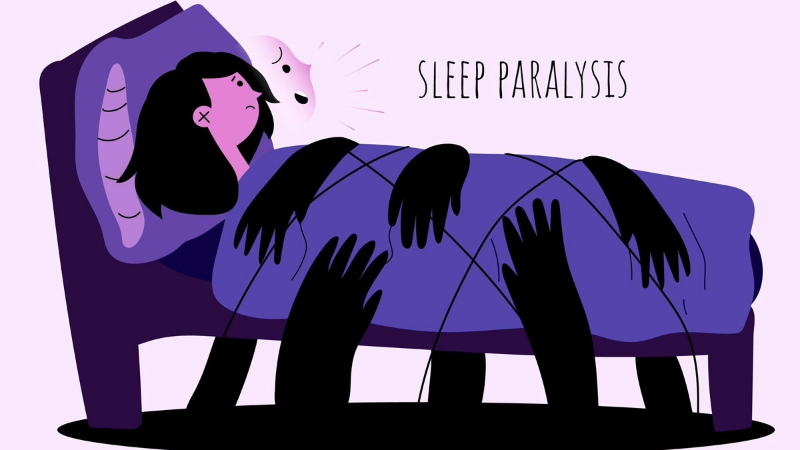
Sleep paralysis is a temporary inability to move or speak that occurs when falling asleep or waking up. During an episode, you are fully conscious, but your body remains paralyzed, and you may also experience vivid hallucinations and intense fear.
Scientifically, sleep paralysis happens during REM (Rapid Eye Movement) sleep, the stage where:
- Dreams are most vivid
- The brain is highly active
- The body is intentionally paralyzed to prevent dream enactment
This paralysis is called REM atonia—a protective mechanism built into the nervous system to stop you from acting out your dreams.
The problem occurs when:
Your mind wakes up—but your body does not.
✅ What Is the Scientific Reason for Sleep Paralysis?
The scientific reason for sleep paralysis is REM intrusion into wakefulness.
Normally, your sleep cycle moves smoothly through:
- Light sleep
- Deep sleep
- REM sleep
- Then full awakening
But in sleep paralysis:
- Your brain wakes up directly from REM
- Your conscious awareness returns
- But your muscles remain shut off
This creates a terrifying state where:
- You can think
- You can see
- You can feel fear
- But you cannot move
The Brainstem and Motor Neuron Inhibition
REM paralysis is controlled by the brainstem, which sends inhibitory signals to your spinal cord using neurotransmitters that shut down muscle movement. In sleep paralysis, that shutdown does not switch off fast enough.
So the scientific core of sleep paralysis is:
A timing failure between consciousness and muscle control.
What Happens in the Brain During Sleep Paralysis
Several brain regions activate at once during an episode:
1. Amygdala (Fear Center)
This triggers:
- Extreme terror
- Panic
- Sense of danger
- Feeling of a threatening presence
2. Visual Cortex
This creates:
- Shadow figures
- Moving shapes
- Hallucinated intruders
3. Prefrontal Cortex
This remains partially offline, meaning:
- Rational thinking is weakened
- You cannot easily tell that the fear is imaginary
4. Thalamus
This sensory gateway allows dream imagery to leak into waking perception.
This is why sleep paralysis does not feel like a normal dream—it feels real.
✅ What Is the Chemical That Causes Sleep Paralysis?
Sleep paralysis is not caused by a single chemical—it is caused by a neurotransmitter imbalance during REM sleep. The main chemicals involved are:
1. GABA
This is the brain’s main inhibitory chemical. It suppresses muscle movement during REM.
2. Glycine
Glycine works with GABA to paralyze the body during dreaming.
3. Acetylcholine
This chemical activates the brain during REM sleep, allowing vivid dreaming and hallucinations.
4. Serotonin & Dopamine
These wake-promoting chemicals are temporarily suppressed in REM. When they turn back on before muscle control returns, sleep paralysis occurs.
So sleep paralysis happens when:
- REM-paralysis chemicals stay active
- But consciousness-activating chemicals return too fast
This chemical mismatch is the true biological trigger.
✅ Do Doctors Believe in Sleep Paralysis?
Yes—sleep paralysis is fully recognized by medical science.
It is classified as:
- Isolated Sleep Paralysis
- Recurrent Sleep Paralysis
- Narcolepsy-Related Sleep Paralysis
Doctors diagnose it using:
- Clinical interviews
- Sleep history
- Polysomnography (sleep studies)
- Neurological assessments
Sleep specialists, neurologists, and psychiatrists all treat sleep paralysis as a real neuro-sleep disorder, not imagination, superstition, or fantasy.
✅ Why Is Sleep Paralysis So Terrifying?
Sleep paralysis is terrifying because it activates all three fear pathways at once:
1. Motor Paralysis
You cannot move, which triggers survival panic.
2. Amygdala Hijack
Your fear center is fully active, flooding your body with adrenaline.
3. Hallucinations
Your brain blends dreaming with reality, creating:
- Shadow figures
- Intruders
- Demonic shapes
- Pressure on the chest
- Voices, breathing, or footsteps
This combination creates pure survival terror. The brain thinks:
“I am awake, I am trapped, and I am under threat.”
This is why sleep paralysis often becomes traumatic by itself.
Types of Sleep Paralysis
1. Isolated Sleep Paralysis
Occurs rarely and without long-term disorder.
2. Recurrent Sleep Paralysis
Happens repeatedly and causes major fear and sleep avoidance.
3. Narcolepsy-Related Sleep Paralysis
Occurs as part of a neurological sleep disease involving REM intrusion into waking life.
What Triggers Sleep Paralysis Scientifically
Sleep paralysis rarely occurs randomly. The most common scientific triggers include:
- Sleep deprivation
- Irregular sleep schedules
- Night shift work
- Jet lag
- High stress & cortisol
- Anxiety disorders
- PTSD and trauma
- Sleeping on the back
- Alcohol use
- Stimulants
- Blue light exposure at night
Anything that disrupts REM stability increases your risk.
Physical and Psychological Symptoms
Physical Symptoms
- Total immobility
- Chest pressure
- Difficulty breathing
- Rapid heart rate
- Tingling
- Buzzing vibrations
Psychological Symptoms
- Intense fear
- Intruder hallucinations
- Feeling watched
- Doom sensation
- Dissociation
- Fear of dying
Sleep Paralysis vs Night Terrors vs Narcolepsy
| Condition | Key Feature |
|---|---|
| Sleep Paralysis | Awake but paralyzed |
| Night Terrors | Asleep and panicking |
| Narcolepsy | REM intrusion in daytime |
They are often confused, but they are neurologically different.
Can Sleep Paralysis Harm the Brain or Body?
Scientifically:
- Sleep paralysis does NOT cause brain damage
- It does NOT cause heart attacks
- It does NOT stop oxygen intake
- It does NOT lead to death
The fear is intense—but the body is safe.
Why Sleep Paralysis Feels Supernatural
Across cultures, sleep paralysis has been blamed on:
- Demons
- Witches
- Jinn
- Evil spirits
- Shadow beings
Science shows that:
- Hallucination + paralysis + fear = supernatural interpretation
- The brain fills fear with cultural imagery
What feels paranormal is actually REM dream content spilling into waking reality.
How to Stop Sleep Paralysis Naturally
- Go to bed and wake up at the same time
- Avoid sleeping on your back
- Reduce caffeine
- Lower stress before bed
- Do not sleep severely overtired
- Practice slow breathing at night
- Limit screen exposure
Medical Treatment Options
When severe, doctors may use:
- REM-suppressing medications
- Anxiety medications
- CBT-I (cognitive behavioral therapy for insomnia)
- Trauma-focused therapy
How Anxiety and Trauma Increase Sleep Paralysis
Anxiety increases:
- Cortisol
- REM fragmentation
- Hyperarousal
Trauma keeps the nervous system in survival mode, making sleep paralysis more frequent, vivid, and terrifying.
What to Do During a Sleep Paralysis Episode
- Wiggle your toes
- Control your breathing
- Blink your eyes
- Focus on moving one finger
- Remind yourself: “This will pass.”
Episodes usually last a few seconds to a few minutes.
How to Prevent Recurring Sleep Paralysis
- Consistent sleep rhythm
- Stress boundaries
- Trauma healing
- Anxiety regulation
- Daily nervous-system calming habits
Myths vs Scientific Facts
| Myth | Scientific Truth |
|---|---|
| Demons cause it | REM intrusion causes it |
| You stop breathing | Breathing continues |
| You can die | No deaths caused by sleep paralysis |
| It means possession | It is neurological |
When to See a Doctor
Seek medical help if:
- Episodes are frequent
- You have daytime sleep attacks
- You feel intense panic or depression
- You suspect narcolepsy
Hope & Recovery: Sleep Paralysis Is Treatable
Most people completely recover with:
- Sleep schedule repair
- Stress control
- Anxiety treatment
- Trauma therapy
- Nervous system regulation
Your brain can relearn safe sleep.
Expanded Scientific FAQs
Is sleep paralysis dangerous?
No. It feels dangerous but is not physically harmful.
Why do I see shadow figures?
Because the visual cortex creates dream imagery while awake.
Why does chest pressure occur?
Because chest muscles are temporarily paralyzed.
Is sleep paralysis linked to mental illness?
It is linked to anxiety, PTSD, and narcolepsy—not psychosis.
Can sleep paralysis go away permanently?
Yes, many people fully recover with proper treatment.
Conclusion: The Fear Is Real—But So Is the Science
Sleep paralysis is one of the most terrifying experiences a human can endure—but it is not supernatural, dangerous, or permanent. It is a neurochemical timing error between dreaming and waking, intensified by fear, stress, and trauma.
Once you understand the real science behind it, the fear begins to lose its power. With time, proper sleep care, and nervous-system healing, your sleep can become safe again.
You are not broken.
Your brain simply misfired a survival mechanism.
And survival mechanisms can be retrained.