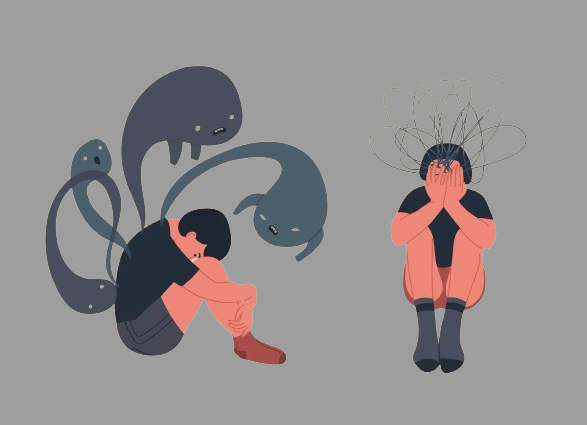
Mental stress symptoms without anxiety are more common than most people realize — and they can be deeply confusing. You may not feel worried, panicked, or fearful. Yet your body feels tense. Your sleep is off. patience is thin. Your mind feels foggy. Something feels “wrong,” but it doesn’t feel like anxiety.
If you’ve ever thought, “Why do I feel stressed for no reason?” or “Can you be stressed without anxiety?” — you’re not alone.
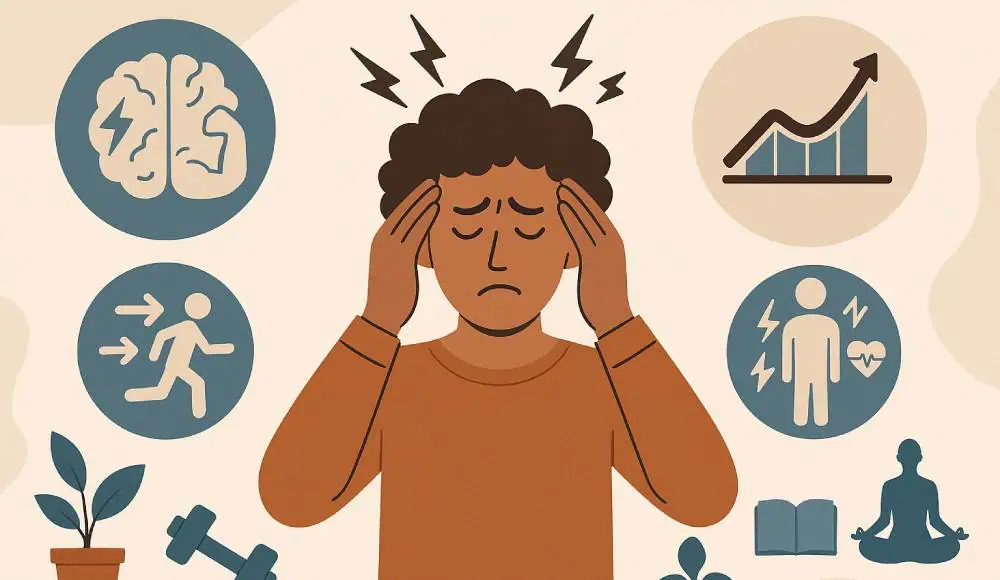
Stress and anxiety are often used interchangeably, but they are not the same. And yes, you can absolutely experience stress in your body and brain without feeling anxious in the traditional sense.
Can You Be Stress Without Anxiety?
Yes — you can be stressed without anxiety.
Stress is a physiological response to pressure or demand. Anxiety is typically an emotional response involving fear, worry, or anticipation of threat.
You can have:
- A racing heart without fear
- Muscle tension without panic
- Exhaustion without worry
- Irritability without anxious thoughts
Quick Definition
You can experience stress without anxiety because stress is the body’s biological response to pressure, while anxiety involves emotional fear or worry. It’s possible to feel physically tense, fatigued, or overwhelmed without experiencing anxious thoughts.
Stress vs. Anxiety: What’s the Difference?
| Stress | Anxiety |
|---|---|
| Triggered by pressure or demands | Triggered by fear or perceived threat |
| Often external cause | Often internal anticipation |
| Body activation | Mind + body activation |
| Can feel neutral or flat emotionally | Usually feels worried or fearful |
| May disappear after rest | Can persist without clear trigger |
Stress activates your nervous system. Anxiety adds emotional distress to that activation.
Some people experience high-functioning stress — they keep going, stay productive, appear calm — while their nervous system remains activated underneath.
Mental Stress Symptoms Without Anxiety
Mental stress symptoms without anxiety can be subtle, gradual, and easy to dismiss. Because there’s no panic or obvious fear, you might assume “it’s nothing.”
But your body keeps score.
Let’s break this down into physical, emotional, and cognitive signs.
Physical Symptoms of Mental Stress Without Anxiety
Even if your thoughts feel calm, your body may show signs of chronic activation.
1. Muscle Tension
- Tight shoulders
- Jaw clenching
- Neck stiffness
- Lower back discomfort
This happens because stress activates the fight-or-flight system, which prepares muscles for action — even if no action is needed.
2. Headaches
Tension headaches are strongly linked to chronic stress. You may notice a dull pressure around the forehead or temples without feeling anxious.
3. Digestive Changes
Stress affects digestion through the gut-brain axis. Symptoms may include:
- Bloating
- Acid reflux
- Constipation
- IBS-like symptoms
You may not feel anxious — but your stomach feels unsettled.
4. Fatigue (Wired but Tired)
Chronic stress elevates cortisol. Over time, this can lead to:
- Energy crashes
- Brain fog
- Difficulty waking up
- Feeling exhausted but restless
5. Sleep Disturbances
You might not lie awake worrying — but you:
- Wake up frequently
- Feel unrested
- Have shallow sleep
- Experience vivid dreams
Your nervous system remains slightly activated.
6. Heart Palpitations Without Panic
Stress can increase heart rate subtly throughout the day. You may feel your heart beating harder — but not feel afraid.
Emotional Symptoms
Mental stress symptoms without anxiety often show up emotionally in non-obvious ways.
Irritability
You snap faster. Small inconveniences feel bigger than usual. Not because you’re anxious — but because your stress tolerance is lower.
Emotional Numbness
Chronic stress can blunt emotional responsiveness. You may feel:
- Flat
- Disconnected
- Less excited
- Less motivated
Overwhelm Without Fear
You feel overloaded — but not panicked.
It’s more like:
“I just can’t handle one more thing.”
Low Frustration Tolerance
Minor setbacks feel draining. You have less emotional bandwidth.
Cognitive Symptoms
Stress impacts executive functioning.
Brain Fog
Difficulty thinking clearly.
Forgetfulness
Misplacing items more often.
Decision Fatigue
Small decisions feel exhausting.
Reduced Motivation
Not depressed — just mentally drained.
Why Do I Feel Stressed for No Reason?
This is one of the most common questions related to mental stress symptoms without anxiety.
Often, there is a reason — it’s just not obvious.
1. Accumulated Micro-Stress
Small daily stressors add up:
- Emails
- Notifications
- Traffic
- Noise
- Multitasking
Individually manageable. Together overwhelming.
2. Hidden Emotional Load
You may be carrying:
- Responsibility for others
- Financial pressure
- Career expectations
- Relationship tension
Even if you’re not consciously worrying.
3. Sleep Deprivation
Poor sleep elevates cortisol and reduces emotional regulation.
4. Burnout
Burnout doesn’t always feel anxious. It can feel numb, drained, and detached.
You may feel stressed for no reason because chronic micro-stress, burnout, sleep deprivation, or accumulated emotional pressure can activate your nervous system without triggering anxious thoughts. Stress often builds gradually and becomes your new “normal.”
What Does Chronic Stress Feel Like?
Chronic stress feels like living with your engine idling too high — all the time.
Not redlining. Not panicking. Just always slightly “on.”
Common Chronic Stress Sensations
- Tight chest
- Frequent sighing
- Jaw clenching
- Digestive discomfort
- Trouble relaxing
- Constant mental background noise
Wired but Tired
This phrase describes chronic stress perfectly.
You feel:
- Physically drained
- Mentally restless
- Unable to fully relax
Emotional Flatness
Chronic stress can dampen joy. You don’t feel terrible — you just don’t feel fully alive.
What Illnesses Can Stress Cause?
Research suggests chronic stress is linked to multiple health conditions. Stress does not directly “cause” disease in isolation — but it contributes to vulnerability.
High Blood Pressure
Prolonged stress can increase blood pressure over time.
Digestive Disorders
Stress impacts gut motility and inflammation.
Weakened Immunity
Chronic cortisol elevation suppresses immune response.
Tension Headaches
Muscle tension contributes to chronic headaches.
Insomnia
Ongoing activation interferes with deep sleep cycles.
Hormonal Imbalance
Stress affects thyroid, reproductive hormones, and blood sugar regulation.
Skin Conditions
Stress can trigger flare-ups in eczema, psoriasis, and acne.
How the Body Stores Stress Without Anxiety
Stress activates the sympathetic nervous system (fight or flight). Even without anxiety, this activation may persist.
Fight Response
Tight muscles. Irritability. Restlessness.
Flight Response
Overworking. Avoidance. Constant busyness.
Freeze Response
Shutdown. Brain fog. Emotional numbness.
Your body may stay in mild survival mode — even if your mind feels calm.
High-Functioning Stress (When You Seem Fine But Aren’t)
Many people experiencing mental stress symptoms without anxiety appear successful.
They are:
- Productive
- Responsible
- Reliable
- Composed
But internally:
- They can’t relax
- feel pressure constantly
- They overcommit
- They rarely rest fully
This is high-functioning stress.
15 Signs You Might Have Mental Stress Symptoms Without Anxiety
- Jaw clenching
- Tight shoulders
- Frequent headaches
- Digestive upset
- Restless sleep
- Snapping at loved ones
- Emotional flatness
- Forgetfulness
- Overworking
- Avoiding downtime
- Skin flare-ups
- Frequent colds
- Constant busyness
- Feeling wired at night
- Trouble enjoying hobbies
Each of these can signal chronic stress — even without anxiety.
How to Reduce Stress Without Anxiety
Regulation doesn’t require panic to work.
1. Nervous System Breathing
Inhale 4 seconds, exhale 6–8 seconds.
Longer exhales activate parasympathetic calm.
2. Daily Movement
Walking, stretching, or light strength training reduces cortisol.
3. Sleep Hygiene
- Consistent bedtime
- Reduced screens
- Cool room
4. Digital Boundaries
Reduce constant notifications.
5. Emotional Check-Ins
Ask:
“What am I carrying today?”
6. Structured Downtime
Schedule real rest.
7. Therapy or Coaching
Professional guidance helps unpack hidden stress patterns.
When to See a Doctor
Seek evaluation if you experience:
- Persistent chest pain
- Severe fatigue
- Ongoing insomnia
- Significant mood changes
- Digestive pain
- Frequent infections
Always rule out medical causes.
Conclusion
Mental stress symptoms without anxiety can quietly shape your daily life. You may not feel panicked — but your body might be asking for attention.
Stress doesn’t always shout. Sometimes it whispers through tight muscles, restless sleep, and subtle exhaustion.
The good news? Awareness is powerful. Small changes in sleep, boundaries, breathing, and recovery time can begin restoring balance.
Your body isn’t broken. It’s responding to pressure.
And you can teach it to feel safe again.