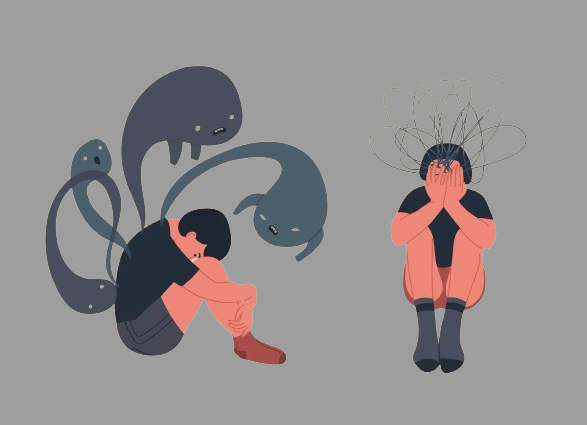
Disorganized attachment in adults often feels like living with two opposing instincts at the same time. You crave closeness, intimacy, and connection—yet the moment someone gets too close, your nervous system panics. You pull away, shut down, or sabotage the relationship, only to feel the pain of distance immediately after.
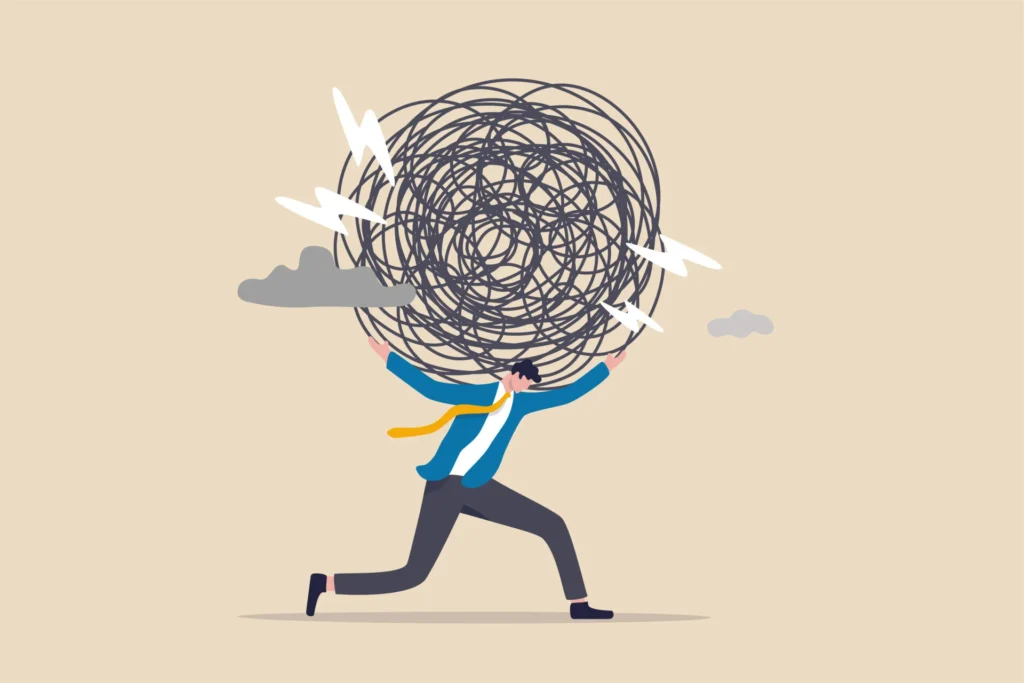
If you’ve ever thought “I want love, but love feels unsafe”, you may be experiencing disorganized attachment.
This attachment style—sometimes called fearful-avoidant attachment—is one of the most misunderstood patterns in adult relationships. Many people blame themselves for being “too much,” “too distant,” or “emotionally broken,” without realizing their reactions are rooted in early attachment trauma, not personal failure.
In this guide, you’ll learn:
- What disorganized attachment in adults really is
- The most common signs and behaviors
- How it shows up in romantic relationships
- Why it develops
- Which attachment style is hardest to heal
- And most importantly, how healing is possible
What Is Disorganized Attachment in Adults?
Disorganized attachment in adults is an insecure attachment style marked by conflicting emotional responses to intimacy. A person with this attachment style experiences closeness as both deeply desired and deeply threatening.
Unlike other attachment styles:
- Anxious attachment seeks closeness
- Avoidant attachment avoids closeness
- Disorganized attachment does both at the same time
This internal conflict creates confusion, emotional volatility, and unstable relationship patterns.
Origins in Attachment Theory
The concept of disorganized attachment comes from attachment research pioneered by John Bowlby and expanded by Mary Ainsworth. Later, Mary Main identified disorganized attachment as a distinct category, often linked to trauma or frightening caregiving.
In childhood, disorganized attachment forms when:
- The caregiver is both a source of comfort and fear
- Safety is inconsistent or unpredictable
- Love is mixed with threat, neglect, or emotional chaos
The child’s nervous system never learns a stable response to closeness.
That unresolved fear carries into adulthood.
What Are the Signs of Disorganized Attachment in Adults?
Disorganized attachment in adults shows up across emotional, behavioral, and relational patterns. The signs are often subtle at first but become more visible in close relationships.
Emotional Signs
- Intense fear of abandonment and fear of intimacy
- Emotional overwhelm followed by emotional numbness
- Sudden mood shifts in close relationships
- Chronic shame or self-blame
- Feeling “too broken to be loved”
Behavioral Signs
- Hot-and-cold behavior in relationships
- Pulling away after moments of closeness
- Testing partners to see if they’ll leave
- Self-sabotage when things feel stable
- Difficulty trusting even safe people
Internal Experience
People with disorganized attachment often think:
- “I want you close—but not that close”
- “If I let my guard down, something bad will happen”
- “I don’t know why I act this way”
These reactions are nervous-system driven, not conscious choices.
What Does Disorganized Attachment Look Like in Relationships?
Disorganized attachment in relationships often creates a painful push-pull dynamic that affects both partners.
In Dating
- Intense chemistry early on
- Fast emotional bonding
- Sudden withdrawal once attachment forms
- Ghosting followed by regret
- Fear of being seen too deeply
In Long-Term Relationships
- Closeness feels overwhelming
- Conflict triggers shutdown or explosive reactions
- Difficulty expressing needs safely
- Alternating between dependence and independence
- Feeling trapped and lonely at the same time
Partners may feel confused, rejected, or blamed—while the person with disorganized attachment feels constantly dysregulated.
How Does Disorganized Attachment Develop?
Disorganized attachment usually develops in childhood environments where safety and danger were intertwined.
Common contributing experiences include:
- Emotional or physical abuse
- Neglect or abandonment
- Caregivers with untreated trauma
- Inconsistent caregiving
- Growing up in fear-based households
The Core Problem: Nervous System Confusion
A child learns:
“The person I need for safety is also the person I fear.”
This creates a biological conflict:
- Approach for comfort
- Avoid for survival
That conflict never fully resolves without healing.
Which Attachment Style Is the Hardest to Heal?
Many experts consider disorganized attachment the most complex to heal—not because it’s hopeless, but because it involves both anxiety and avoidance plus trauma.
Comparison:
- Anxious attachment → fear of abandonment
- Avoidant attachment → fear of dependence
- Disorganized attachment → fear of closeness and separation
The nervous system is constantly on high alert.
Important Truth:
Harder does not mean impossible.
With the right support, disorganized attachment can heal deeply.
How Do You Heal a Disorganized Attachment?
Healing disorganized attachment in adults requires working with both emotional awareness and nervous system regulation.
1. Awareness Without Shame
Recognizing patterns without self-judgment is the first step. These behaviors were once survival strategies.
2. Trauma-Informed Therapy
Modalities that help include:
- Attachment-focused therapy
- Somatic therapies
- EMDR
- Internal Family Systems (IFS)
Therapy helps rewire fear responses safely.
3. Nervous System Regulation
Daily practices such as:
- Breathwork
- Grounding exercises
- Body-based awareness
- Gentle movement
Regulation creates emotional safety.
4. Inner Child Work
Healing the unmet needs of childhood helps integrate fragmented emotional responses.
5. Learning Secure Attachment Behaviors
This includes:
- Expressing needs clearly
- Tolerating emotional closeness
- Staying present during conflict
- Building trust slowly
Can Disorganized Attachment Become Secure?
Yes. Through a process called earned secure attachment, adults can develop healthy relationship patterns—even if they didn’t experience them early in life.
Healing timelines vary, but consistent progress is possible with:
- Self-awareness
- Safe relationships
- Nervous system healing
- Professional support
The brain is adaptable. Trauma is not destiny.
When to Seek Professional Help
Professional support is strongly recommended if you experience:
- Repeated relationship breakdowns
- Emotional shutdowns or panic during intimacy
- Trauma flashbacks
- Severe anxiety or depression
- Difficulty functioning in daily life
Seeking help is a strength, not a failure.
Frequently Asked Questions
Is disorganized attachment a mental illness?
No. Disorganized attachment is a relational pattern, not a mental disorder. It reflects early nervous system adaptations to unsafe environments.
Can you have disorganized attachment and anxiety?
Yes. Many people with disorganized attachment experience anxiety due to chronic nervous system dysregulation.
Can two disorganized partners have a healthy relationship?
Yes, but it requires high self-awareness, communication skills, and often professional support.
How long does healing take?
Healing is gradual and non-linear. Many people see meaningful change within months, with deeper healing over time.
Conclusion: Healing Is Possible
Disorganized attachment in adults is not a life sentence. It is a learned survival pattern—one that can be unlearned with compassion, safety, and support.
You are not broken.
Your nervous system adapted to survive.
And with the right tools, secure, healthy connection is absolutely possible.