
Narcissistic personality disorder (NPD) touches far more households, workplaces, and friendships than most people assume. While older clinical estimates suggested lower numbers, recent psychiatric studies put the lifetime prevalence of NPD anywhere from under 1% to more than 6% of the U.S. population, depending on the diagnostic thresholds used.
If you are trying to figure out how to deal with a narcissist, generic advice to “just ignore them” is rarely enough. This exhaustive guide breaks down what NPD actually is, how it differs from ordinary self-absorption, and provides exact, therapist-approved scripts for setting boundaries and protecting your mental health.
Quick Answer: How to Deal With a NarcissistTo effectively deal with a narcissist, you must stay emotionally neutral and avoid direct confrontation, as criticism often triggers narcissistic rage. Set ironclad boundaries, judge them by their sustained actions rather than empty promises, and use the “gray rock” method to minimize emotional engagement. If the relationship turns abusive, prioritize your safety, seek professional therapy, and consider going no-contact. |
What Is Narcissistic Personality Disorder?
In everyday conversation, “narcissist” gets used loosely for anyone who seems vain or self-centered. Clinically, however, narcissistic personality disorder is a specific Cluster B personality disorder outlined in the Diagnostic and Statistical Manual of Mental Disorders (DSM-5-TR). It is marked by a pervasive, inflexible pattern of grandiosity, a persistent need for admiration, and a marked lack of empathy that begins by early adulthood.
It is crucial to understand the difference between narcissism and NPD. Many people exhibit narcissistic traits under stress, but they do not meet the full clinical threshold for a personality disorder.
Clinical Insight: The “Fragile Armor” Paradigm
“In our clinical practice, the most defining feature observed isn’t just the arrogance, it is how fragile the ego underneath truly is,” notes Dr. Adil Farooq. “The outward grandiosity functions as psychological armor. When that armor is pierced by even mild criticism or a partner setting a boundary, the resulting emotional fallout, often presenting as rage or deep withdrawal, is what makes these relationships so difficult to navigate.”
Generative Insight: Grandiose vs. Covert Narcissism
NPD does not present the same way in every person. Modern psychological research categorizes these traits into different presentations. Understanding the presentation is key to knowing how to deal with the person effectively.

| Feature | Grandiose (Overt) Narcissism | Covert (Vulnerable) Narcissism |
| Outward Demeanor | Outwardly confident, dominant, and comfortable seeking the spotlight. | Quiet, hypersensitive, and prone to playing the victim. |
| Reaction to Criticism | Quick to dismiss, mock, or attack the person criticizing them. | Internalizes it as a deep personal slight; prone to passive-aggressive retaliation. |
| Underlying Motivation | Driven by a need to be seen as superior, successful, and powerful. | Driven by a belief that they are uniquely misunderstood and under-appreciated. |
| Co-occurring Risks | Often presents alongside aggressive or antisocial behaviors. | Frequently accompanied by severe anxiety, depression, or deep insecurity. |
Core Signs and Symptoms of NPD
If you suspect you are dealing with someone who has NPD, look for these consistent, rigid behavioral loops:
1. Grandiosity and an Inflated Sense of Importance
The defining feature of NPD is grandiosity, a false sense of superiority that goes well beyond ordinary confidence. People with NPD often believe only other “special” or high-status people can truly understand them. They routinely exaggerate their achievements and expect to be recognized as superior without commensurate accomplishments.
2. A Self-Protective Fantasy World
Because reality often contradicts their inflated self-image, many people with NPD lean on distortion and magical thinking. They imagine boundless success, power, or the “perfect” relationship. Anything that threatens this illusion triggers a defensive reaction clinically known as narcissistic injury.
3. An Ongoing Need for Admiration (Narcissistic Supply)
Praise does not “stick” for long with NPD. The need for validation is a constant requirement. This drives people with NPD toward one-sided relationships where the other person’s attention, compliance, and approval, known as narcissistic supply, is the primary currency.
4. Empathy Deficits and Interpersonal Exploitation
Difficulty genuinely stepping into another person’s emotional experience is a core DSM-5-TR diagnostic feature. In practice, this looks like using other people instrumentally to meet personal goals, frequently without any real awareness of the emotional damage they are causing to their partners, children, or colleagues.
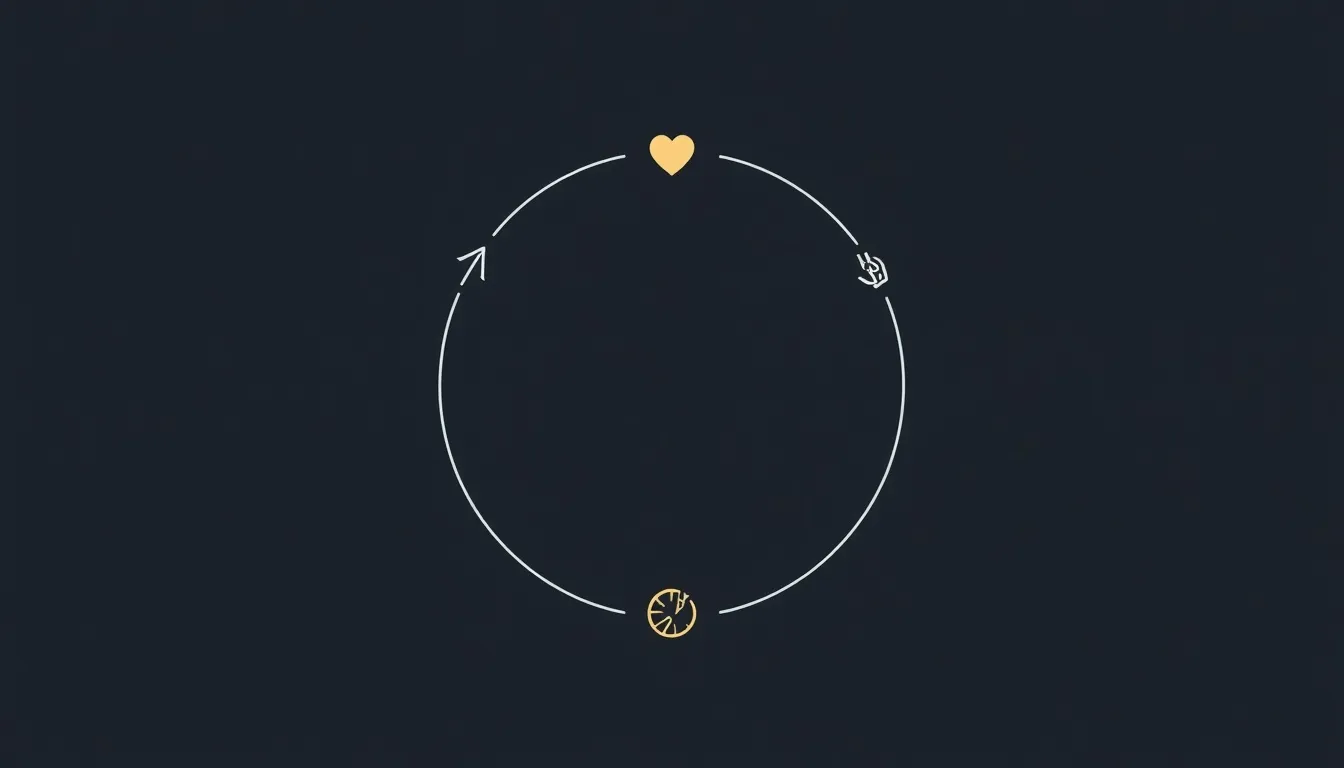
The 3 Stages of the Narcissistic Abuse Cycle
When dealing with a highly toxic or malignant narcissist, interactions rarely remain stable. They typically operate in a predictable, repetitive loop known as the narcissistic abuse cycle. Recognizing where you are in this cycle is critical for your own psychological safety.
- Idealization (Love Bombing): In the beginning, the narcissist showers you with overwhelming affection, praise, and attention. They mirror your interests and make you feel like you are the center of their universe. This phase is designed to secure you as a reliable source of narcissistic supply.
- Devaluation: Once they feel secure, the mask slips. The praise turns into passive-aggressive comments, outright criticism, and gaslighting. If you try to hold them accountable, they may employ DARVO (Deny, Attack, Reverse Victim and Offender), making you feel like you are the toxic one.
- Discard: When you are completely emotionally exhausted, or when you finally set an ironclad boundary, they may discard you abruptly. This is often followed by a “smear campaign” where they paint you as the villain to friends, family, or coworkers. Eventually, they may attempt to “hoover” (suck you back in) to restart the cycle.
How to Deal With a Narcissist in Different Relationships
The strategy for handling NPD traits varies wildly depending on your proximity to the person and the nature of the relationship.
1. A Narcissistic Romantic Partner
Romantic entanglement with a narcissist is uniquely devastating because of the emotional and financial intertwinement.
- Stop Debating Reality: Gaslighting is common. Do not waste energy trying to convince them of your version of reality. Trust your own memory.
- Protect Your Independence: Narcissistic partners often try to isolate their significant others from friends and family to increase dependency. Maintain your outside support networks fiercely.
- Seek Solo Counseling: Couples counseling with a narcissist is often counterproductive and can be weaponized against you. Seek individual therapy to rebuild your self-esteem.

2. A Narcissistic Parent or Family Member
Dealing with a narcissistic parent involves mourning the supportive parent you never had.
- Establish Low-Contact (LC): If full No-Contact (NC) is impossible, practice Low-Contact. Limit interactions to brief, structured visits (e.g., public holidays) and heavily restrict the personal information you share with them.
- Anticipate Guilt Trips: Narcissistic parents view their children as extensions of themselves. When you exert independence, they will use guilt and obligation. Recognize the guilt-trip as a tactic, not a truth.
3. A Narcissistic Boss or Coworker
The workplace provides narcissists with the status and hierarchy they crave.
- Communicate in Writing: Never rely on verbal agreements. Follow up every meeting or verbal instruction with an email summary to create a paper trail.
- Do Not Compete Emotionally: Narcissistic coworkers view everything as a zero-sum game. Defuse their competitive nature by giving them public credit for minor things while you quietly secure the actual high-value projects.
Actionable Scripts: Exactly What to Say
You cannot control a narcissist’s behavior, but you can control your response. Use these therapist-approved scripts to hold your boundaries without escalating the conflict.
- When they are gaslighting you: “I understand that is how you remember it, but my memory of the event is different. I am not going to debate the past with you.”
- When they are raging or yelling: “I will not be spoken to this way. I am stepping away from this conversation now, and we can try again when things are calm.”
- When they demand an immediate decision: “I need time to process this. I will give you my answer tomorrow morning.”
- When they try to shift the blame to you: “I am willing to take responsibility for my part in this, but I will not take responsibility for your actions.”
Expert Do’s and Don’ts
- DO stay emotionally neutral: Narcissists often rely on provoking a visible reaction, surprise, anger, or hurt, because that reaction provides them with a sense of control.
- DO use the Gray Rock Method: Dr. Farooq strongly advocates for the gray rock technique, deliberately making yourself an emotionally uninteresting, low-reaction presence so there’s nothing left for the other person to feed on emotionally.
- DO hold your boundaries: Decide in advance what you will and won’t tolerate. State your boundaries calmly and enforce real consequences.
- DON’T attempt direct confrontation: Constructive criticism is usually read as a direct personal attack and often escalates into hostility or rage.
- DON’T absorb their blame: Blame-shifting and projection are standard defense mechanisms. Mentally separate what you are actually responsible for from what is being unfairly placed on you.
CRITICAL SAFETY WARNING: When It Is Not Safe to Stay
Not every relationship involving narcissistic traits is abusive, but some absolutely are. If your interactions involve gaslighting, physical threats, or coercive control, standard communication tactics will not protect you.
If you feel physically unsafe at any point, contact the National Domestic Violence Hotline at 1-800-799-7233 or text “START” to 88788 for confidential, 24/7 support in the U.S.
Can You Force a Narcissist to Get Treatment?
A common hurdle for partners and family members is wanting to “fix” the person with NPD. The hard clinical truth is that genuine change is incredibly slow. The disorder itself inherently limits a person’s self-insight, as admitting a flaw threatens their grandiosity. You cannot force a narcissist into therapy, nor can you treat them yourself.
If the individual does willingly seek professional psychiatric help, practitioners typically rely on specialized, long-term psychotherapy:
- Cognitive Behavioral Therapy (CBT): Identifies and restructures distorted thought patterns.
- Dialectical Behavior Therapy (DBT): Builds distress tolerance and emotion regulation skills.
- Mentalization-Based Therapy (MBT): Builds the capacity for self-reflection and genuine empathy.
- Transference-Focused Psychotherapy (TFP): Uses the live therapeutic relationship to examine emotional reactions in real-time.
There is no FDA-approved medication specifically for treating NPD. However, a psychiatrist may prescribe antidepressants or mood stabilizers to manage co-occurring depression or severe anxiety.
If you are the one suffering from the fallout of the relationship, seeking dedicated therapy for narcissistic abuse is one of the most protective and validating steps you can take for your own mental health recovery.
Frequently Asked Questions (FAQ)
Can a narcissist change?
Genuine change is possible but uncommon and slow, as NPD involves low insight into one’s own behavior. Sustained change requires the person to seek therapy voluntarily, stay committed long-term, and be motivated by profound personal growth rather than just avoiding immediate negative consequences.
What is the best way to deal with a narcissist daily?
Stay factual and emotionally neutral, avoid direct confrontation, hold firm boundaries, and judge them by their actions, not their promises. Using the gray rock method helps reduce drama and emotional exhaustion in ongoing relationships you cannot fully step away from.
Is narcissism the exact same as narcissistic personality disorder?
No. Narcissism is a personality trait that exists on a spectrum in most people. Narcissistic personality disorder (NPD) is a formal clinical diagnosis requiring a pervasive, rigid pattern of grandiosity and empathy deficits that significantly impairs a person’s relationships and daily functioning.
What triggers a narcissist’s anger?
Anything that threatens their sense of superiority or shatters their self-protective fantasy. This includes direct criticism, being ignored, being outshined, or having their version of reality challenged. Clinicians refer to this explosive reaction as narcissistic rage.
Can you have a healthy relationship with someone who has NPD?
It is possible but highly difficult. It depends heavily on the severity of their traits, their willingness to engage in long-term specialized therapy, and both partners maintaining ironclad boundaries. Most healthy long-term relationships with an NPD partner require significant, permanent adjustments.
How do therapists diagnose narcissistic personality disorder?
Diagnosis requires a comprehensive clinical evaluation by a licensed mental health professional using DSM-5-TR criteria. This involves a detailed patient history, observing behavioral patterns across multiple life domains, and ruling out overlapping conditions like antisocial or borderline personality disorder.
When should you go no-contact with a narcissist?
No-contact is highly recommended when a relationship involves ongoing emotional abuse, physical threats, coercive control, or repeated boundary violations that do not improve despite clear communication. It is best to make and execute this decision alongside a licensed therapist to ensure your safety.
External Clinical References
- American Psychiatric Association. (2022). Diagnostic and Statistical Manual of Mental Disorders (5th ed., text rev.).
- Mitra, P., & Fluyau, D. (2023). Narcissistic Personality Disorder. In StatPearls. StatPearls Publishing. Available from NCBI.
- National Domestic Violence Hotline. (n.d.). Identify Abuse. The Hotline.
Medical Disclaimer & E-E-A-T AttributionThis article is for educational purposes and does not replace personalized medical or psychological advice. If you are recovering from a brain injury, trauma, or a mental health condition, work with a licensed clinician to build a plan suited to your situation. Written by: Adil Farooq, Psychiatry Magazine Medically reviewed by: [Dr. Adil Farooq MS · PhD] · Updated: 2026 |