|
⚡ Quick Answer Lion’s Mane (Hericium erinaceus) can trigger anxiety, jitteriness, heart palpitations, or panic-like sensations in sensitive individuals. The three primary neurochemical causes are: (1) an abrupt spike in Nerve Growth Factor (NGF) that over-stimulates the nervous system, (2) excess acetylcholine production that pushes the cholinergic system past its optimal threshold, and (3) a histamine intolerance or Mast Cell Activation Syndrome (MCAS) response to mushroom compounds. If you are currently experiencing anxiety, stop taking the supplement immediately and hydrate. |
If you started taking Lion’s Mane to boost focus or reduce stress and ended up feeling worse more anxious, wired, or even on the edge of a panic attack you are not imagining it. This is a documented side effect, and it has specific neurochemical explanations.
Unlike a simple allergic reaction, Lion’s Mane-induced anxiety is driven by how the mushroom’s active compounds interact with your brain chemistry. Understanding exactly why this happens is the first step to knowing what to do about it and whether you can ever safely reintroduce the supplement.
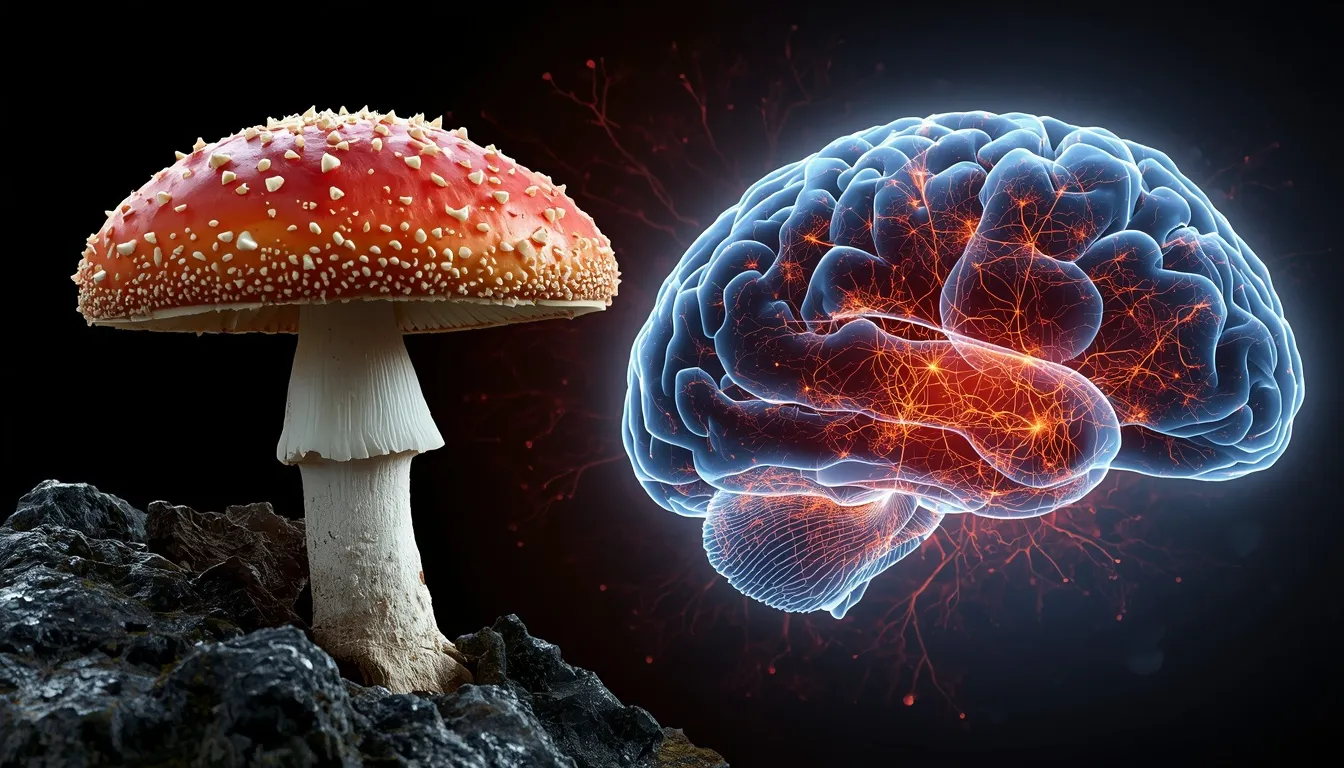
3 Neurochemical Causes of Lion’s Mane Anxiety
Most users take Lion’s Mane expecting stress relief. When it produces the opposite effect, it is almost always attributable to one or more of the following three biological mechanisms.
1. Nerve Growth Factor (NGF) Overstimulation
Lion’s Mane contains two classes of bioactive compounds unique to this species: hericenones (concentrated in the fruiting body) and erinacines (concentrated in the mycelium). Both compounds cross the blood-brain barrier and directly stimulate the synthesis of Nerve Growth Factor (NGF) a protein that regulates the growth, survival, and differentiation of neurons.
While a gradual increase in NGF promotes neuroplasticity and cognitive resilience, a sudden, high-dose spike can cause neurological overactivity. For individuals with a hypersensitive autonomic nervous system, this rapid neuro-stimulation mimics the physiological signature of anxiety: elevated heart rate, restlessness, muscle tension, and a feeling of being ‘wired.’
This is especially pronounced with mycelium-based extracts, which contain higher concentrations of erinacines than fruiting-body-only products.
2. Acetylcholine Overload (Cholinergic System Disruption)
Lion’s Mane significantly upregulates the brain’s acetylcholine levels a neurotransmitter central to memory consolidation, alertness, and parasympathetic nerve signaling. While balanced acetylcholine is essential for cognition, excess acetylcholine is clinically associated with acute stress responses, depressive symptoms, and anxiety.
If your baseline neurochemistry already trends toward higher cholinergic activity common in people who are naturally anxious or who consume other cholinergic supplements such as Alpha-GPC or CDP-choline adding Lion’s Mane can push the system past its optimal threshold. The result is an abrupt jittery or anxious state that can onset within 30 to 90 minutes of ingestion.
This mechanism is particularly relevant for people who already feel wired, hypervigilant, or struggle with racing thoughts, as their cholinergic systems may already be running at a high baseline.
3. Histamine Intolerance and Mast Cell Activation Syndrome (MCAS)
All medicinal mushrooms, including Lion’s Mane, have the potential to trigger histamine release or act as histamine liberators. For individuals with underlying histamine intolerance or Mast Cell Activation Syndrome (MCAS) a condition in which mast cells release excessive immune mediators consuming Lion’s Mane extracts can provoke a rapid inflammatory response.
The resulting symptoms racing heart, skin flushing, shortness of breath, and a sense of dread closely mirror what a panic attack feels like. Many individuals in this category have been told their anxiety is ‘psychological’ when it is, in fact, a histamine-mediated physiological response to the mushroom’s compounds.
Alcohol-based (dual) extracts are more likely to trigger this response than water-based extracts, as ethanol extraction concentrates a broader spectrum of immune-reactive compounds.
Who Is Most at Risk of Lion’s Mane Anxiety?
Not everyone who takes Lion’s Mane experiences anxiety. The following individual characteristics significantly increase the likelihood of an adverse response:
- Pre-existing anxiety disorders: Any baseline elevation in cortisol or sympathetic nervous system tone amplifies the effects of NGF or acetylcholine stimulation.
- Histamine intolerance or MCAS: Individuals who react poorly to fermented foods, aged cheeses, alcohol, or high-histamine foods face a higher risk.
- High-baseline cholinergic activity: People who are naturally high in acetylcholine, or who take choline-boosting supplements alongside Lion’s Mane.
- Sensitive autonomic nervous system (ANS): Those with hypermobile Ehlers-Danlos syndrome (hEDS), POTS, or dysautonomia frequently report adverse reactions to neurologically active supplements.
- First-time or high-dose users: Taking more than 1,000 mg on the first dose, or jumping to a high-concentration dual extract without titrating up.
- People on SSRIs or SNRIs: There are theoretical interactions between serotonergic medications and the NGF-promoting activity of Lion’s Mane consult your prescribing physician before combining.
Extract Type, Dosage, and Anxiety Risk
Not all Lion’s Mane products carry the same risk profile. The likelihood of experiencing anxiety depends heavily on the extraction method, the part of the mushroom used, and the dose.
|
Factor |
Low Risk |
High Risk (Anxiety Triggers) |
Why It Matters |
|
Extract Type |
Hot-water extract (fruiting body only) |
Dual-extract (alcohol + water) or pure mycelium |
Alcohol extracts concentrate erinacines, yielding stronger neurological impact |
|
Daily Dose |
250 mg – 1,000 mg per day |
> 2,000 mg per day or any dose on the first use without titration |
Starting low (250 mg) and titrating up minimizes neurochemical shock |
|
Timing |
With food, morning or midday |
On an empty stomach, evenings, or close to bedtime |
Food slows absorption and moderates peak neurochemical concentration |
|
Part of Mushroom |
Fruiting body only |
Mycelium-dominant or full-spectrum |
Mycelium contains the highest erinacine concentration the most potent NGF stimulator |
Note: Many mass-market Lion’s Mane products labeled as ‘full-spectrum’ or ‘8:1 extract’ are mycelium-dominant and contain significant amounts of erinacines. Always check the label for the source material.
Does Lion’s Mane Interact with Medications?
This section is frequently absent from other articles but is clinically important. Lion’s Mane has documented or theoretical interactions with several drug classes:
- SSRIs and SNRIs (antidepressants): Because Lion’s Mane influences NGF which regulates neuronal survival pathways that antidepressants also modulate combining them may amplify or unpredictably alter the effect. This has not been well-studied in humans. Consult your prescribing physician.
- Cholinesterase inhibitors (e.g., donepezil for Alzheimer’s): These drugs already elevate acetylcholine. Stacking Lion’s Mane on top significantly raises the risk of cholinergic overload symptoms including anxiety, sweating, nausea, and bradycardia.
- Anticoagulants (e.g., warfarin, aspirin): Some research suggests polysaccharides in Lion’s Mane may have mild anticoagulant properties. People on blood thinners should seek medical clearance.
- Immunosuppressants: Because Lion’s Mane may modulate immune activity via mast cell pathways, individuals on immunosuppressant therapy should not use it without a physician’s oversight.
What to Do If You Experience Lion’s Mane Anxiety Right Now

If you are currently experiencing heightened anxiety, jitteriness, or panic-like symptoms after taking Lion’s Mane, follow these steps in order:
- Stop immediately: Do not attempt to ‘push through’ or assume your body will adapt. Continuing will only prolong the neurochemical disruption.
- Hydrate: Drink 2–3 glasses of water. The active compounds in Lion’s Mane (particularly water-soluble beta-glucans) are excreted renally. Adequate hydration accelerates clearance.
- Avoid other stimulants: Cut out caffeine, refined sugars, and nicotine for the next several hours, as each of these compounds the neurological stress anxiety after eating sugar is a well-documented parallel response.
- Take calming agents if available: Many individuals report significant relief from L-theanine (200 mg) or magnesium glycinate (300–400 mg), both of which down-regulate sympathetic nervous system activity without sedation.
- Rest and reduce stimulation: Avoid bright screens, loud environments, or stressful tasks while the compound clears your system. Diaphragmatic breathing (4-7-8 technique) can help activate the parasympathetic response.
- Seek emergency care if needed: If you experience chest pain, difficulty breathing, or symptoms you cannot manage, treat this as a medical emergency and seek immediate care.
If your anxiety has shifted from an acute reaction to a persistent dread about ever taking a supplement again, you may be entering anticipatory anxiety a psychological loop that forms independently of the original chemical trigger.
How Long Does Lion’s Mane Anxiety Last?
The duration depends on the type of extract, the dose taken, and your individual metabolic rate:
- Acute symptoms (racing heart, jitteriness): Typically resolve within 4–8 hours for water extracts and up to 12–16 hours for alcohol-based (dual) extracts, due to the higher bioavailability of erinacines in ethanol preparations.
- Residual nervous system sensitivity: A background sense of elevated nervous tension can persist for 2–4 days after the acute phase, particularly in individuals with an already-sensitive autonomic nervous system.
- Psychological loop (anticipatory anxiety): If you experienced a frightening episode, the psychological component may last weeks or longer and may warrant brief cognitive-behavioral therapy (CBT) techniques or professional support.
Unlike the metabolic half-life of pharmaceuticals, Lion’s Mane’s neurological effects do not follow a clean linear decline because the NGF that is produced continues to affect neuronal signaling after the original compounds have been metabolized.
Can You Safely Reintroduce Lion’s Mane After an Anxiety Reaction?
Yes for most individuals but only with a very different approach than the original attempt. Here is a structured reintroduction protocol if you want to try again:
- Wait at least 7 days before reintroducing to ensure your nervous system has fully normalized.
- Switch products: Change to a hot-water fruiting body extract with no mycelium content and no alcohol extraction. Look for products that explicitly list hericenones as the primary active compound.
- Start at the lowest dose: Begin at 250 mg per day, taken with a substantial meal in the morning.
- Titrate slowly: Hold at 250 mg for 7–10 days before increasing. If you tolerate that, increase to 500 mg for another 7–10 days.
- Avoid stacking with other nootropics: Do not combine with choline supplements, racetams, or other cholinergic agents during the reintroduction period.
- Pre-medicate with L-theanine: Taking 100–200 mg of L-theanine 30 minutes before your Lion’s Mane dose can buffer the anxiety-inducing acetylcholine spike.
Frequently Asked Questions (FAQ Schema)
The questions below reflect real ‘People Also Ask’ data for this topic in 2026 and are structured for JSON-LD FAQ Schema markup on the published page.
Can Lion’s Mane cause a permanent chemical imbalance?
No. Lion’s Mane temporarily elevates Nerve Growth Factor and acetylcholine levels while the active compounds are in your system. Once they are metabolized, your neurochemistry returns to its baseline. This is not a permanent change. However, the temporary disruption can feel severe if your nervous system is sensitive, which is why stopping and hydrating immediately is the recommended response.
Why does Lion’s Mane cause anxiety in some people but reduce it in others?
This comes down to individual neurochemical baseline. In people with low-normal acetylcholine levels or a less-reactive nervous system, Lion’s Mane gently nudges the system toward a better-functioning state. In people who already run ‘hot’ neurologically high baseline cortisol, elevated acetylcholine, or a reactive ANS the same supplement pushes the system past its tolerance threshold.
Should I switch from mycelium to fruiting body to reduce anxiety risk?
Yes, strongly. Mycelium extracts contain a much higher concentration of erinacines, which cross the blood-brain barrier more aggressively and produce a stronger NGF spike. Switching to a simple hot-water extract of the fruiting body significantly reduces this effect. Look for products that list the fruiting body as the only source material and do not use alcohol in the extraction process.
Can I take Lion’s Mane if I am on an antidepressant?
The combination has not been studied rigorously in controlled human trials. There are theoretical interactions between Lion’s Mane’s NGF-promoting activity and the mechanisms of SSRIs and SNRIs. Until more data is available, the safest course of action is to consult your prescribing physician or psychiatrist before combining these.
Does Lion’s Mane affect serotonin as well as acetylcholine?
The primary established mechanisms are NGF stimulation and acetylcholine modulation. Some preclinical studies suggest Lion’s Mane may have indirect effects on serotonin metabolism by influencing the gut-brain axis (given the high concentration of polysaccharides that affect gut microbiome composition), but this pathway is not yet confirmed in human clinical trials.
Is Lion’s Mane anxiety different from a panic attack?
Mechanistically, yes though the subjective experience can be nearly identical. A Lion’s Mane anxiety response is chemically triggered by neurological or histamine-mediated pathways, whereas a classic panic disorder panic attack arises from a dysregulated fear circuit in the amygdala without an external chemical trigger. The practical distinction matters: a Lion’s Mane reaction will resolve once the compound clears your system, whereas panic disorder typically requires a longer-term therapeutic approach.